Share from any browser or native protocol. Nothing to install.
Any meeting. Every display. One wireless screen sharing platform.
Mersive Polaris turns any display into a shared workspace. Laptops share from a browser tab, phones from the Mersive app or native protocol. Side by side, several at once, across any network.
No client installAny meeting platformISO 27001 certified, SOC 2 attested
9K+organizations worldwide
200K+rooms under management (cloud & on-prem)
15 yrsMersive Solstice → Polaris lineage
10 yrscommitted platform lifecycle
2×AVTechnology Best in Show & SCN Installation Product Award, InfoComm 2025 & 2026 (Polaris · Host, shown at InfoComm as the Mersive Tablet)
The platform
Four workloads, one Polaris platform.
Polaris enables every display with wireless screen sharing, hybrid meetings and digital signage. Polaris Cloud is the single pane that deploys, monitors and updates all three: every room, every site, one login.
A Polaris room runs the meeting platform chosen for that meeting, not one fixed to the room.
Polaris rooms run the vendors’ own native clients, so the chat, the layouts and Copilot are the ones Microsoft and Zoom shipped, not a re-rendering of them inside another vendor’s workspace. Which platform a room runs is chosen per meeting rather than fixed at install: move from Teams to Zoom between one meeting and the next, with no reboot and no swap. And with Polaris Host, BY lets the room run and control the hybrid meeting itself, without requiring a user’s device. Which vendors re-render and which do not, in their own wording, on the compare matrix.
Polaris ships with secure boot on a TAA-compliant supply chain.
ISO/IEC 27001:2022 certified, with no nonconformities at the June 2026 surveillance audit. SOC 2 Type 2 attested for the Polaris cloud, and the room device assessed by a third party. The July 2026 application assessment returned no critical and no high-severity findings. 802.1x/EAP-TLS on the wire, all of it written down where your security team can read it.
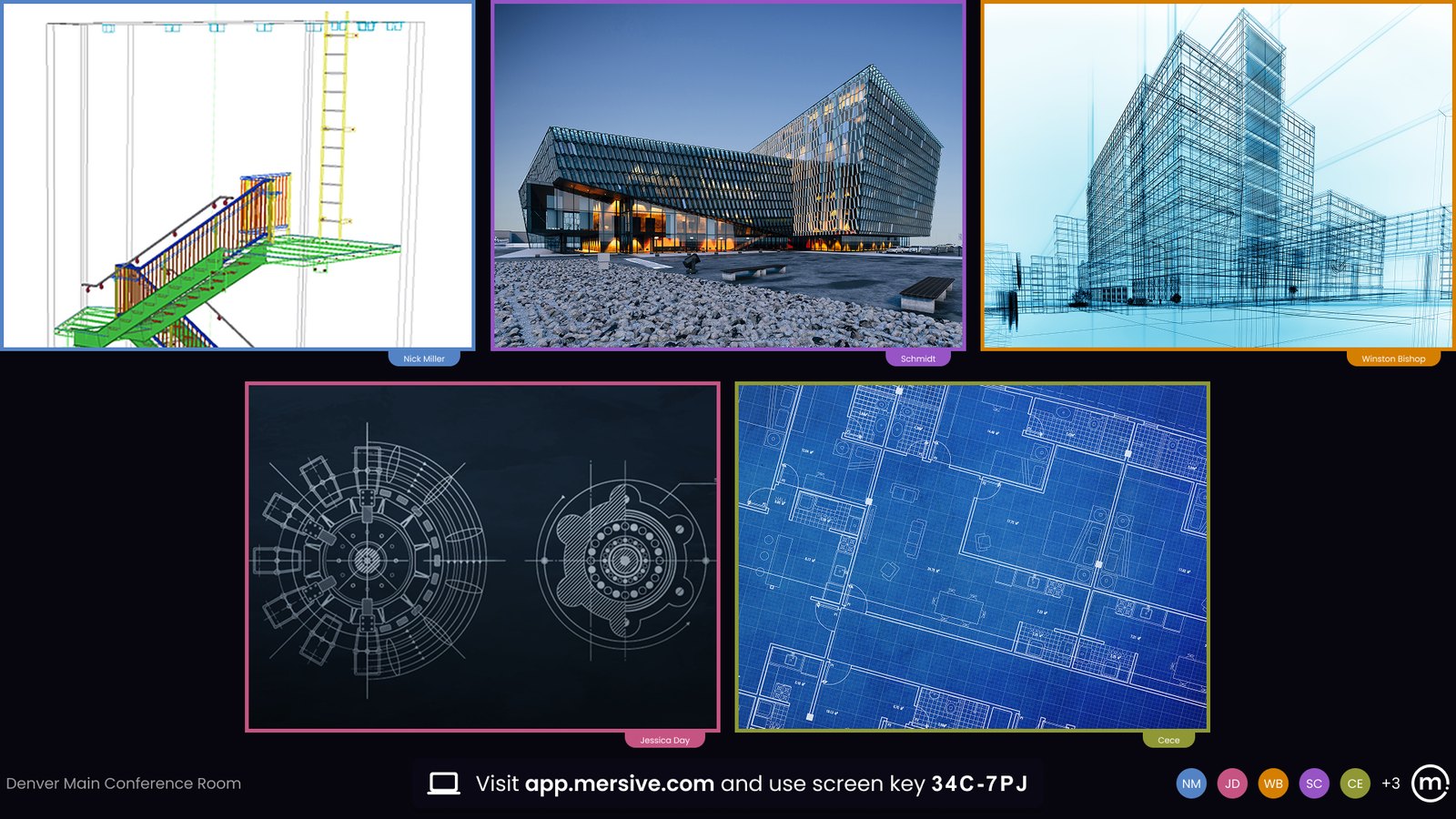
The Polaris workspace holds every share side by side, controlled from any seat.
A true composited workspace: compared, annotated, rearranged live. A panel composites on its own glass. Polaris composites and then encodes the whole workspace back out, both to remote participants who never joined a call and to a browser on any device. That is meeting parity: everyone in the room and everyone remote is looking at the same content at the same time, with no second-class view. That is the line the panel vendors have not crossed.
Polaris shares across VLANs, subnets, buildings and the internet without a VPN.
Mersive does the signaling only: the cloud introduces the two ends, then steps out of the way and the media flows peer-to-peer over a direct, encrypted WebRTC connection. Your content never crosses our cloud. Signaling is outbound-only TLS on port 443, so guests, other VLANs and remote devices reach the room with no VPN and nothing inbound to open.
The problems that bring people here, and why Polaris is easy for everyone who has to live with it.
01Problem
Dongles are lost, creating an ongoing expense.
A dongle is a separate hardware purchase, per seat, and when one goes missing another unit has to be bought. It is also one more piece of inventory to stock, maintain and keep connected to your network.
01Answer
Easy for the AV manager
Polaris shares from the browser, on the device the person already carries. Nothing to buy per seat, nothing to lose, nothing to keep in a drawer.
Every room on one cloud pane: deploy, monitor, and update the whole fleet from your desk. Fewer tickets, fewer truck rolls, a smaller support burden.
Sharing usually means getting the visitor onto the corporate network first: an app to install, an account to create, or a firewall exception to file with IT. The deck stays on their laptop while the room waits.
02Answer
Easy for the user
A guest shares from the browser without joining the corporate network: no app, no account, and no firewall exception to file.
Walk in, open a browser, share. No app, no download, no training, guests included.
The room is locked to one meeting platform and OEM.
A certified room system hosts one platform’s meetings by design, with one vendor bolted to the room, a commitment to that ecosystem for the life of the hardware.
03Answer
Easy for the integrator
Polaris is agnostic about which meeting system users want to deploy and switches from one to another in seconds. No reboot, no swap. Link ships on Polaris Pro only, while Polaris Host can be added to any Polaris Pro or Essentials room.
One cable to the display, PoE+ power on Pro (Essentials uses the 12V adapter), cloud activation: racked to running fast, quotable from an open spec sheet.
Software based — hardware enabled. Installed once, better every quarter.
Hardware based products don't age out; they stop improving. A Polaris subscription keeps advancing: updates, security and new capabilities, with warranty for as long as you subscribe. No forklift upgrades, no care contracts.
If a subscription lapses, the room doesn't brick: local wireless sharing keeps working.
10+YEARS · ONE INSTALL
Wireless screen sharing and mirroring
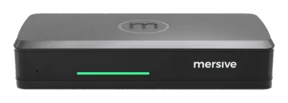
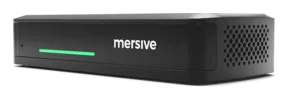
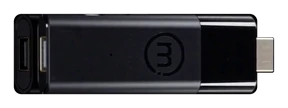
Choose your Polaris hardware
Polaris is one platform, offered in three chassis. All three run the same software and open the same Mersive workspace. What grows with the hardware is I/O, how many sources can share at once and what the room can drive.
One software platform · three versions of hardware sized to fit every room
Polaris begins where native screen mirroring ends. AirPlay, Miracast and Google Cast each hand the display to one device at a time. Polaris puts the Mersive Workspace behind them: a shared canvas where several sources sit side by side at once, arriving by native cast or straight from a browser. The workspace is not bound to the LAN. A guest sitting in the room, a colleague on another VLAN and someone on the other side of the world all reach the same room over the internet, with no VPN to stand up, no network to join and nothing inbound to open.
The workspace isn’t only on the wall. app.mersive.com renders the same workspace for every seat, in the room or remote, so the people who aren’t standing in front of the glass aren’t watching a lesser view of it. And every display runs from one cloud, whether that is a single room or a fleet of thousands. Three layers make it work:
The glass
Any display you already own becomes a Polaris endpoint: a meeting room display, a classroom screen, a lobby wall.
The workspace
Every share lands side by side on the display, from a laptop, a phone, or a browser with nothing installed, and from any network, not just the room’s.
The cloud
The broker and the fleet console: it introduces every session, runs every room, and stays out of the media path.
How a share reaches the room
Scroll it: the same three steps every share takes, whether the person is in the room or on the other side of the world.
1JoinDevices dial out to Polaris Cloud, which authenticate, resolve the screen key, trade SDP and ICE.
2ConnectThe cloud introduces them and steps aside. Media runs on direct links to the pod: in the room it never leaves the building, and from outside it never touches a VPN.
3ComposeShares land side by side on the display as one workspace, and the same workspace renders live in the browser for everyone who isn’t in the room.
Polaris has two ways to move the meeting off the laptop.
Most rooms manage BYOD and stop there: your laptop hosts, and the room is a screen. Going further usually means giving something up: a room locked to one meeting platform, or a bridge that costs you the native client, so chat, recording and Copilot are no longer the ones Teams or Zoom shipped. Polaris hybrid meeting technology provides a platform agnostic solution while retaining the native client functionality.
At Mersive, we see three models of hybrid meeting equipped rooms. BYOD displays the meeting on the room display but lacks integration to the peripherals. BYOM adds room peripherals to the meeting, enabling the meeting to wirelessly use devices such as camera bars. BYOM solutions can also host the meeting on either the user’s laptop or on the room device. Polaris Link is Mersive’s BYOM solution and included in Polaris Pro. Our Link solution moves the meeting onto the Polaris Pro, thereby reducing laptop power draw and compute needs.
At Mersive we see a third model of hybrid meeting rooms, a fully equipped room system which we call “BY” for bring yourself. These rooms can have a user hold a hybrid meeting without their own device. Polaris Host is Mersive’s “BY” solution and it is sold as an add-on to either Polaris Pro or Polaris Essentials. With Polaris Host, the room hosts and is controlled from the device, so nobody has to bring a machine at all.
Neither Polaris Link nor Polaris Host locks the room down to one VTC platform. The platform is chosen per meeting, every client is the vendor’s own, and changing from one to another takes seconds and no reboot.
The three kinds of hybrid room
1 · BYOD: your device aloneYour screen on the glass, VTC client and all. The room shows what your laptop shows, but adds nothing to the call: its own webcam and mic carry it. “Whose microphone should we use” or “who needs to go mute” are common issues for users.2 · BYOM: the laptop or the pod hostsThe meeting gains access to the peripherals. BYOM brings the room’s system and peripherals (e.g. camera bar) into the call, and the meeting client can run on either side: your device, or the room’s. Polaris Link hosts it on the Polaris Pro hardware, taking the memory and power load off your laptop.3 · BY: Polaris Host“BY” makes the room the host system. It starts, controls and shares the hybrid meeting itself, with no user device required. Polaris Host, paired with a Pro or Essentials, does it without the vendor lock-in: the native Teams, Zoom, Webex or Meet client, chosen per meeting and switched in seconds.
cablewireless to Polarismeeting host✕not in the meeting
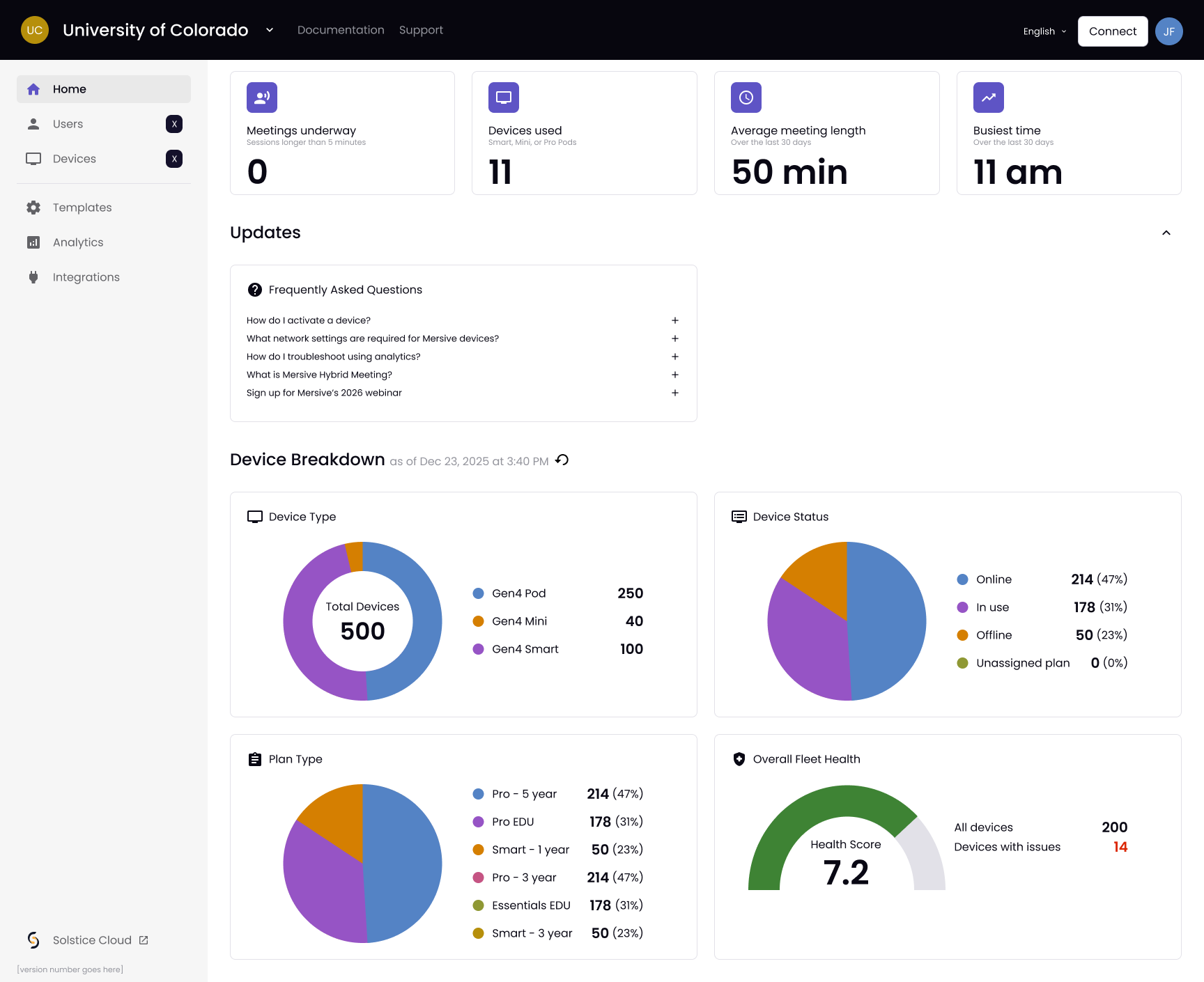
Polaris Cloud carries analytics, activation and conference room management for the whole fleet. One login deploys, monitors and updates every room on every site: templates by room type, staged firmware, health alerts.
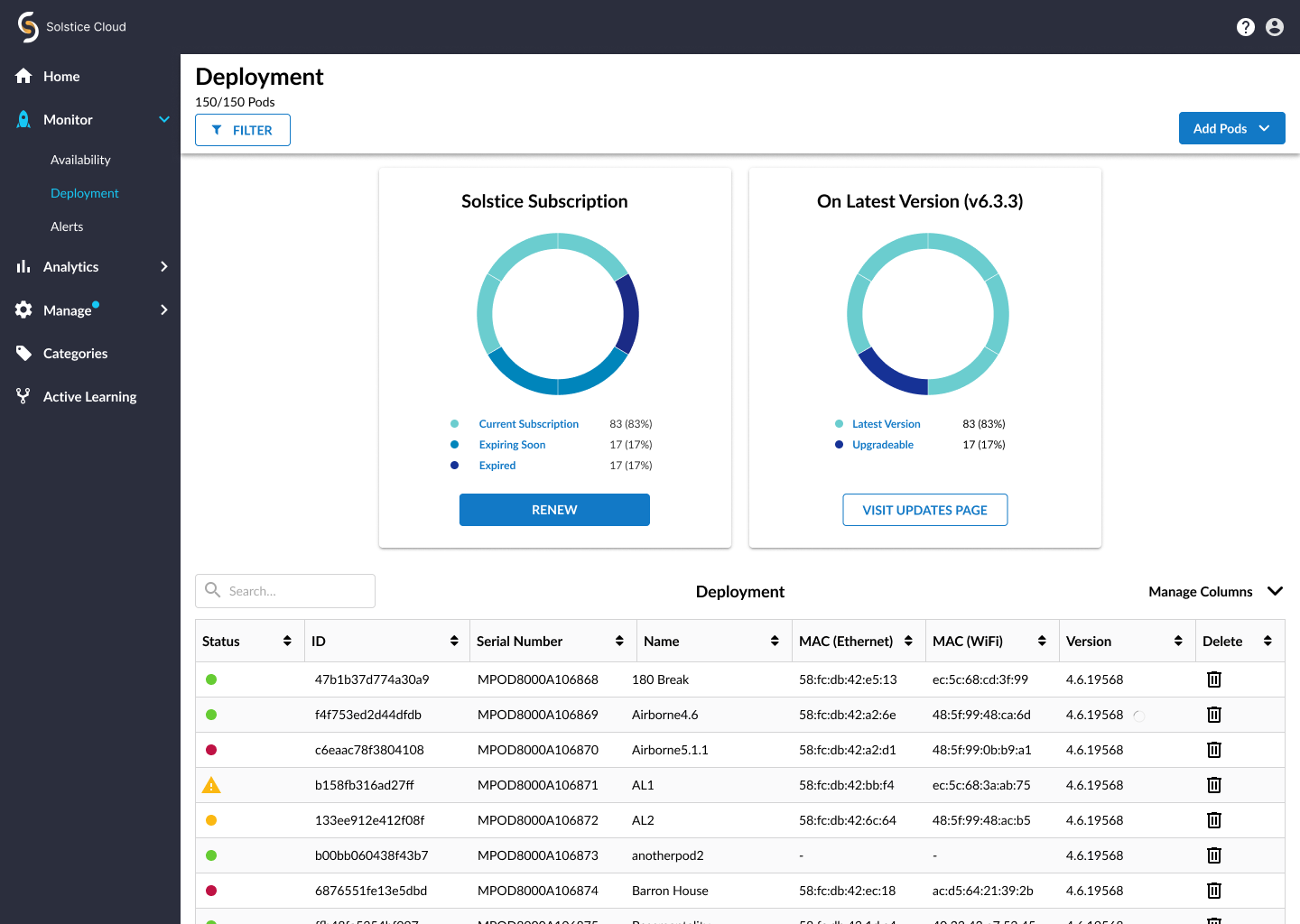
Polaris Cloud panel: the home dashboard. Solstice Cloud panel: the Deployment view. Both are product screenshots with sample data.
Conference room management stops being a building-by-building job. One login deploys, monitors and updates the whole fleet from your desk: templates by room type, so a huddle room and a lecture hall each land configured the way that kind of room should be, firmware staged over a weekend instead of pushed on a Tuesday morning, and health alerts that reach you before the first meeting of the day finds the dead display. Fewer tickets, fewer truck rolls, and a support burden that stops growing every time somebody adds a room.
None of it waits for a migration to finish. Mersive Solstice Cloud goes on running your Gen 3 fleet exactly as it does today and is linked straight from Polaris Cloud, so the two sit side by side and rooms move across when the budget says so rather than when the software insists. One starting point, one login, and no weekend where half the buildings are unmanaged.
How Polaris Cloud works, and what it delivers
Activation and managementEvery pod activates against the cloud and joins the fleet at first boot. One login deploys, monitors and updates every room on every site.
Templates and configurationConfiguration is a template, not a site visit: define a room type once and the hundredth room deploys like the first, staged firmware included.
Analytics and monitoringHealth, alerts and usage analytics flow back from every room, so the amber tile finds you before the ticket does.
Corporate digital signage is usually a second system: another platform, another license, another vendor to call when the lobby screen goes dark. Here it is the platform the meeting rooms already run. The same Polaris Cloud login runs both.
The meeting display you already own, before and after the meeting ends. Same pod, same login.
A dedicated screen in a lobby, a hallway or a cafeteria is a deployment like any other. The difference is what happens to the displays you already bought: a meeting display becomes a signage screen the moment nobody is sharing, which across a working week is most of the time it is switched on. Rooms that used to sit dark between bookings publish instead.
Content is dynamic and event-driven, and it is cached on the device, so a screen keeps publishing through a network outage rather than going to a blue holding slide in front of everybody in the lobby. Every panel is addressed from the same Polaris Cloud login as every room, so there is no second CMS to learn and no separate fleet to keep track of. Signage is included rather than licensed on its own: no second network of players, no second license, no second vendor.
Where signage actually runs
Five ways to feed it, one cloud to publish it, any chassis to run it. A meeting display becomes a signage screen the moment nobody is sharing.
Dedicated signage screensLobbies, hallways, cafeterias, whole floors: Polaris drives signage-only displays as a deployment, dynamic and event-driven, cached locally.
The rooms you already ownMeeting displays double as signage the moment nobody is sharing. Launch puts signage on any other screen for a one-time cost, all in the same Polaris Cloud pane.
Locked-down hardwareSecure boot: the lobby screen only runs firmware we signed and content you published.
Proof in the field: one hospitality customer's headquarters deployment took 350 units, most of them driving signage.
Rogue signals are jamming the airspace above the room. You're the pod — clear the channel. Jammers rain static, splitters multiply, and every fourth wave the FIREWALL sweeps in. Downed signals drop powered displays: relay shield, dual beam, the piercing LANCE and the wide-angle SWEEP.
Shares keep coming. Compose the workspace — complete a row and it renders to the display. Hold a piece for later, trust the ghost, and slam it home when you're sure.
score: 0 · lines: 0 · level: 1 · best: 0
Mars · canyon relay
RELAY RUN
Aliens are looting Earth's audiovisual gear, and someone has to invoice them for it. You're the AV Integrator: fight through three decks of their freighter, shoot the capsules open, and take the equipment back — HDMI becomes a Blaster, a Display fans into Multicast, Coil fires Fiber, a Speaker is pure Subwoofer. Switches level your weapon, Surges take one hit for you. Snatchers steal; make them regret it. A boss holds every deck.
score: 0 · mission: 1/3 · best: 0
Pluto · deep-network maintenance
PACKET MUNCHER
Something is nesting in the farthest switch fabric. Run the corridors, eat every stray packet, and mind the four interference glyphs — each hunts its own way. Grab a powered display and, for a few seconds, the hunters become the hunted. Ten sectors between you and a clean network.
score: 0 · sector: 1/10 · lives: 3 · best: 0
Venus · broadcast campus
SIGNAL JUMPER
Ten displays across the broadcast campus went dark, and the interference is walking around like it owns the place. Run the loading dock, the cable trench, the rooftop, the mezzanine and the antenna tower, then push on through the uplink yard, the static fields, the rack canyon, the microwave bridge and master control — stomp the glyphs flat, bank the signal bits, bump the cache blocks, plant the midpoint flag, ride the ferries, and touch every display back to Polaris green. Game over offers a CONTINUE from the top of the level that beat you.
The campus's flagship display was stolen and walled up in a fortress beyond the north-east mesa. Cross a hundred screens of field, woods, river and dead server yard, crimper in hand — find the two small keys, mind the spikes, arrows and false floors, put five strikes into the CRT TYRANT's open screen, and raise the display where it belongs. Five hollow caves hide heart containers, and the RELAY TOWER on the south-west shore keeps the MERSIVE POLARIS — press X to grab what's in front of you, or to send the puck flying out and back.
The dongle users are pouring out of the rings in formation: HDMI drones, button wingmen, and the big conference pucks running the show. Hold the line in the Polaris fighter. They swoop in, regroup, breathe, and dive. Mind the boss pucks’ PAIRING BEAM — get caught and your fighter is theirs. Shoot that boss down mid-dive and your fighter comes home to fly beside you: DUAL FIRE. Every fourth wave is a demo stage — pure flying, pure bonus, PERFECT if you drop every last one.
score: 0 · wave: 1 · lives: 3 · best: 0
Mercury · the night side circuit
SOLAR CIRCUIT
A run cut across Mercury’s night side, Point A to Point B, against the clock. The sun never sets here and never rises either — it just sits on the horizon throwing its corona up the sky, and everything you can see is either lit by it or hiding from it. The route opens wide and fast, closes to a canyon barely three lanes across, climbs, and falls away again, four stages of it. Keep it on the basalt: the regolith either side will drag you down and take your speed with it. Stay clean and the craft keeps finding more — the longer you hold the line, the faster it will let you go, and the yellow pads are how you get there sooner.