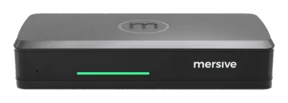
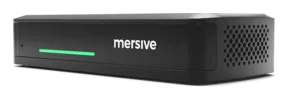
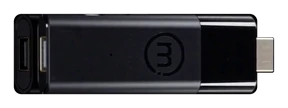
Screen mirroring, built for collaboration.
Polaris lets multiple people share screens side by side in one shared workspace. Compare live content, control the layout from your own device, and give everyone the same view, whether they are in the room or joining remotely.
Bring everyone’s work together.
Put a presentation beside a guest’s browser tab, photos from a phone, or a live dashboard from another location. Polaris brings multiple people’s content into one shared workspace, where they can compare sources side by side and adjust the layout from their own devices.
Side by side, not one at a time
Compare the design against the spec. Put the budget next to the forecast. The meetings that matter are comparisons. A single mirrored screen can't hold both halves.
Composited by room silicon
Rendering many simultaneous streams into one live layout, then encoding that whole workspace back out to remote participants, takes purpose-built hardware. Panels composite on their own glass and the workspace never leaves the room. That's the line the panel vendors haven't crossed.
Why the silicon matters →Controlled from any seat
Annotate, rearrange, feature one source, clear the display, from the browser tab or phone you joined with. The room has no single owner.
Fed from any network
A guest on LTE and a dashboard on another VLAN land on the same workspace as the laptop on corp Wi-Fi: no VPN, no cables.
The architecture →One workspace, six doors.
Web-join is the front door: no app, no download. It isn't the only door, and every door lands on the same workspace, simultaneously.
Share from the browser: nothing to install, guest-proof, Chromebook-native.
Share and control from the phone in your pocket. iOS & Android.
Native Apple sharing: no Mersive software on the device.
Native Windows sharing, straight from the OS.
Chromecast from Chrome and Android: the Chromebook classroom's native path.
An HDMI source joins the workspace as a tile by default. Direct bypass takes the glass full screen and keeps that feed in the room.
AirPlay, Miracast and Google Cast connect locally to the room. Web join and the Mersive apps also support sharing across VLANs and over the internet. Once content joins the workspace, remote participants can see it too.
Polaris Pro has two wired HDMI input modes, selected by the room administrator. Workspace tile is the default: the input joins the workspace alongside wireless shares and is visible to remote participants. Direct bypass (full-screen pass-through) sends the input straight to the room display, outside the workspace. Remote participants do not receive that feed.
Meeting parity: every seat sees the same screen.
The workspace on the room's display is mirrored live to app.mersive.com: everyone who joins, in the room or remote, sees the same workspace on their own screen, live. No craning at a far display, no "can you re-share that," no second-class seats.
How Polaris works
See how room hardware, the shared workspace and Polaris Cloud work together. Follow a step-by-step guide to joining a room and sharing from your browser.
Explore the platform →Pick the tier
Essentials carries the full workspace and cross-network sharing; Pro adds wireless BYOM, HDMI input and dual 4K60 output.
The Polaris family →See it in your own rooms
Hardware trials ship for every product, direct from Mersive. When the rooms prove it, we introduce your regional partner for the rollout.
Start a free trial