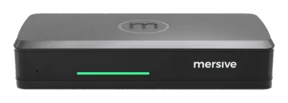
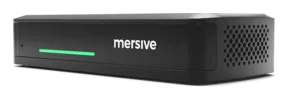
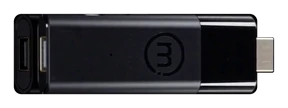
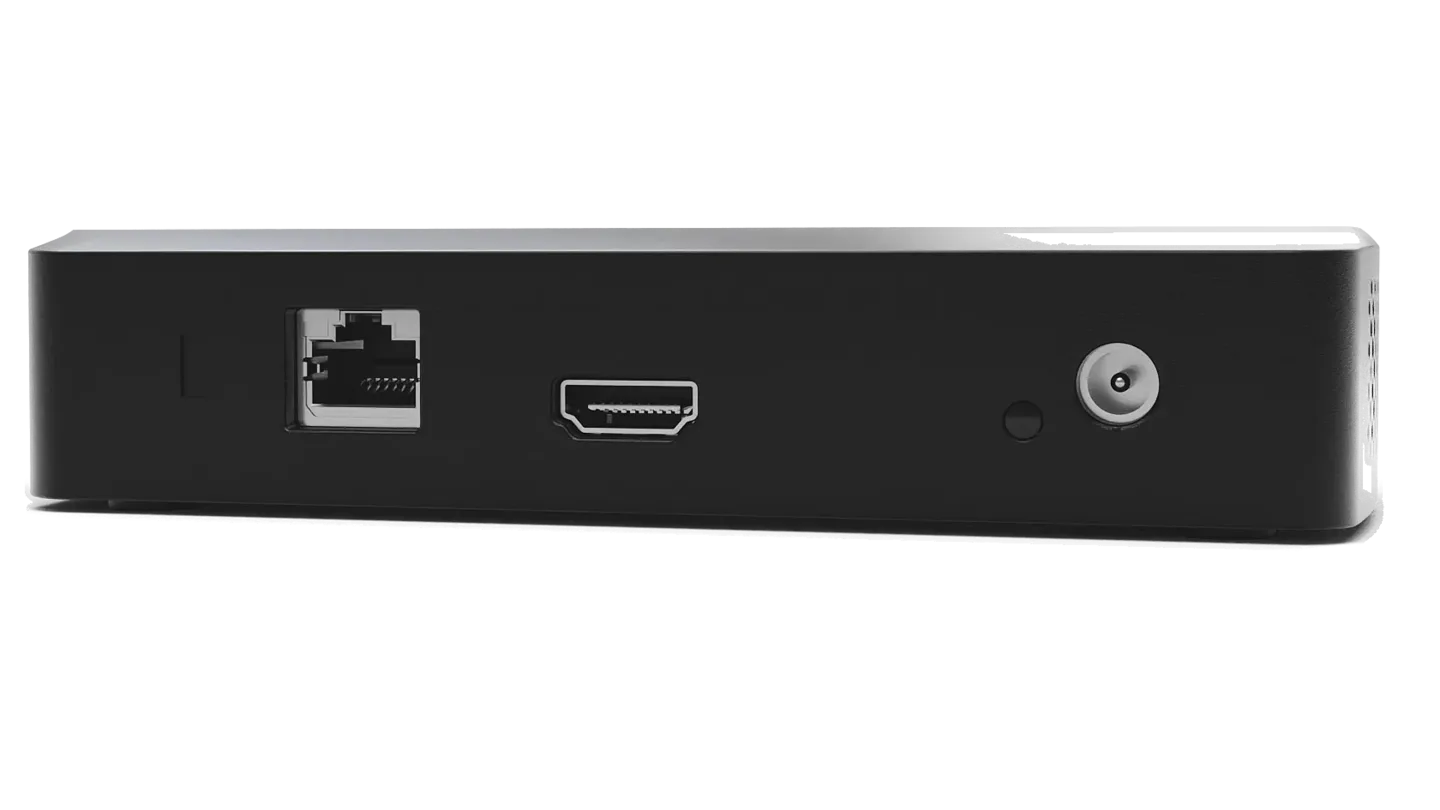
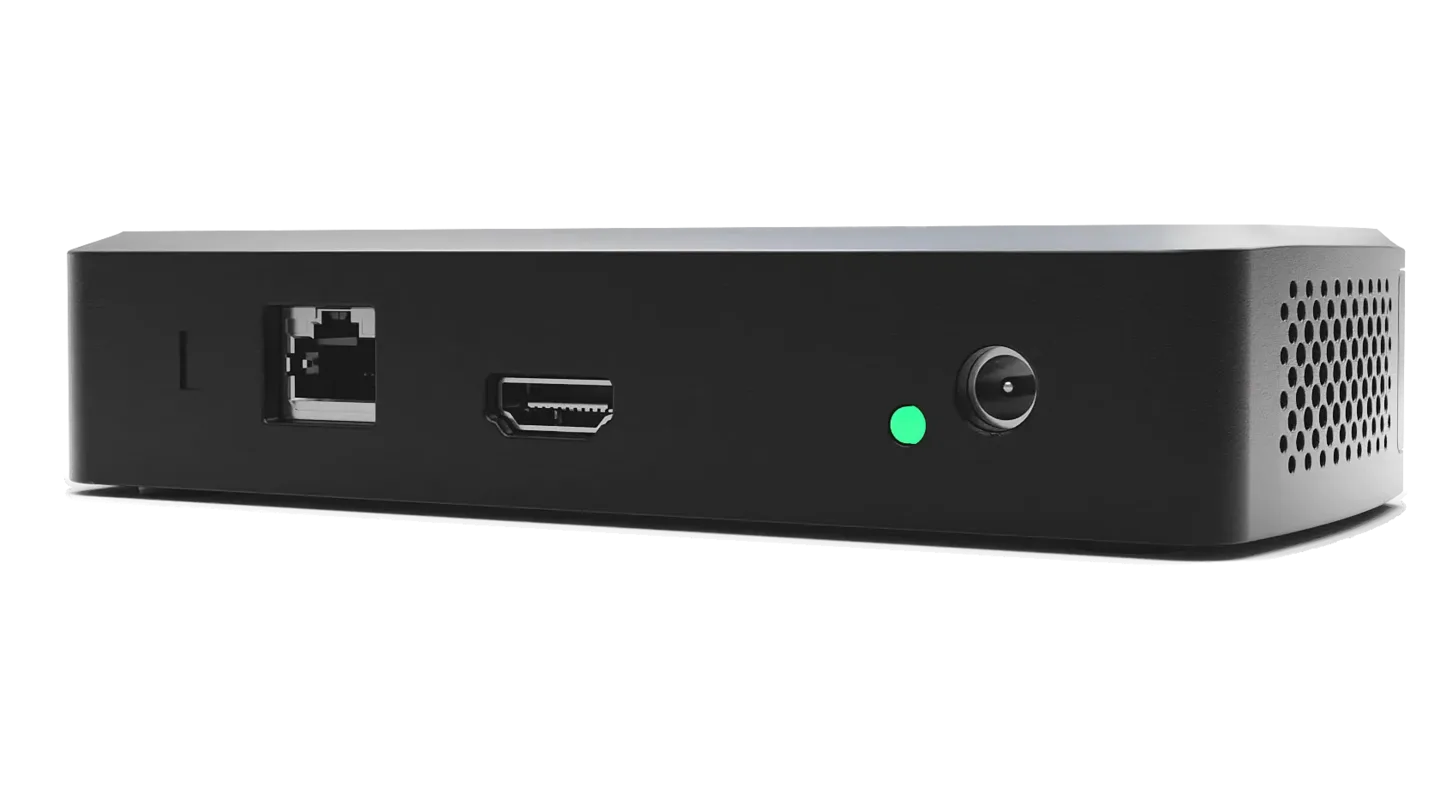
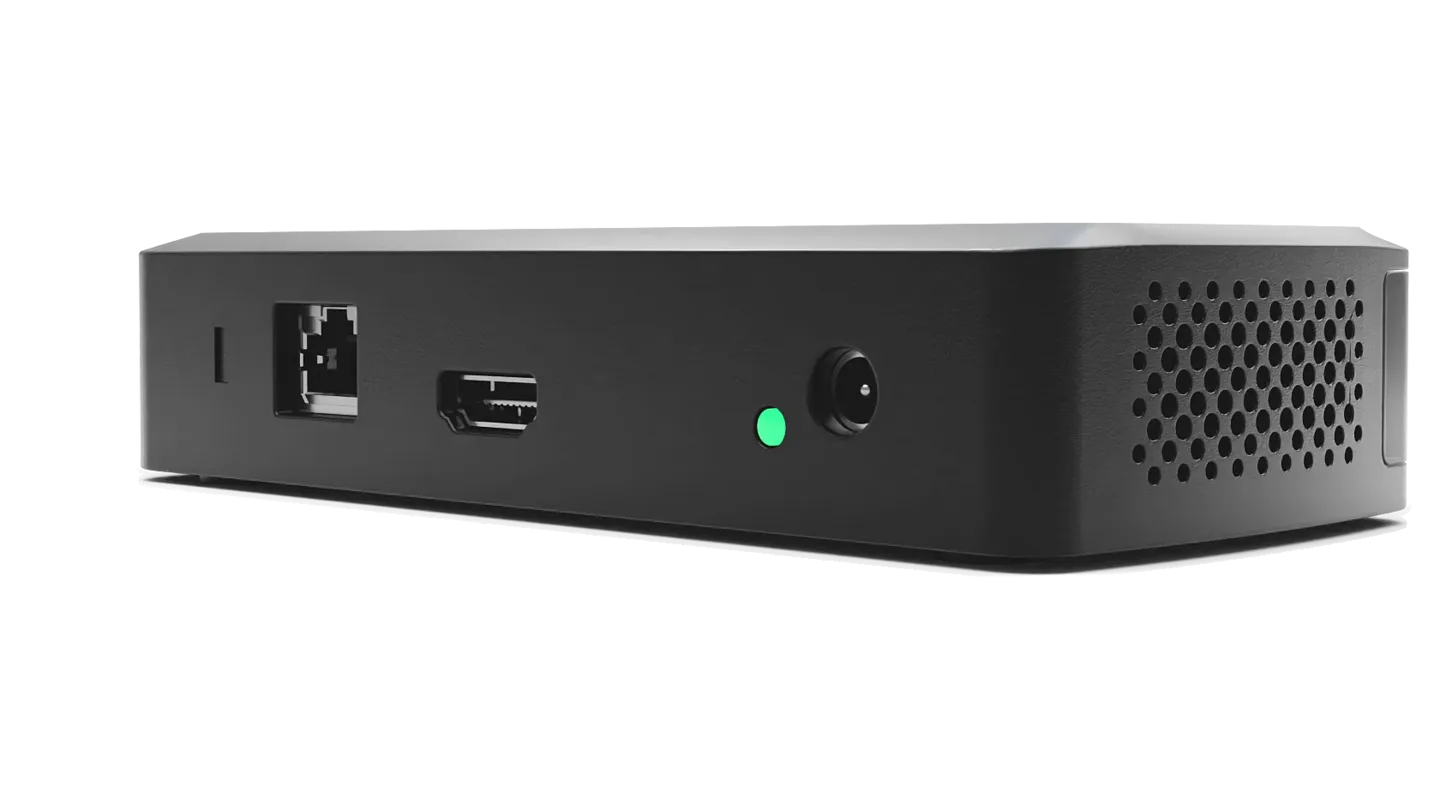
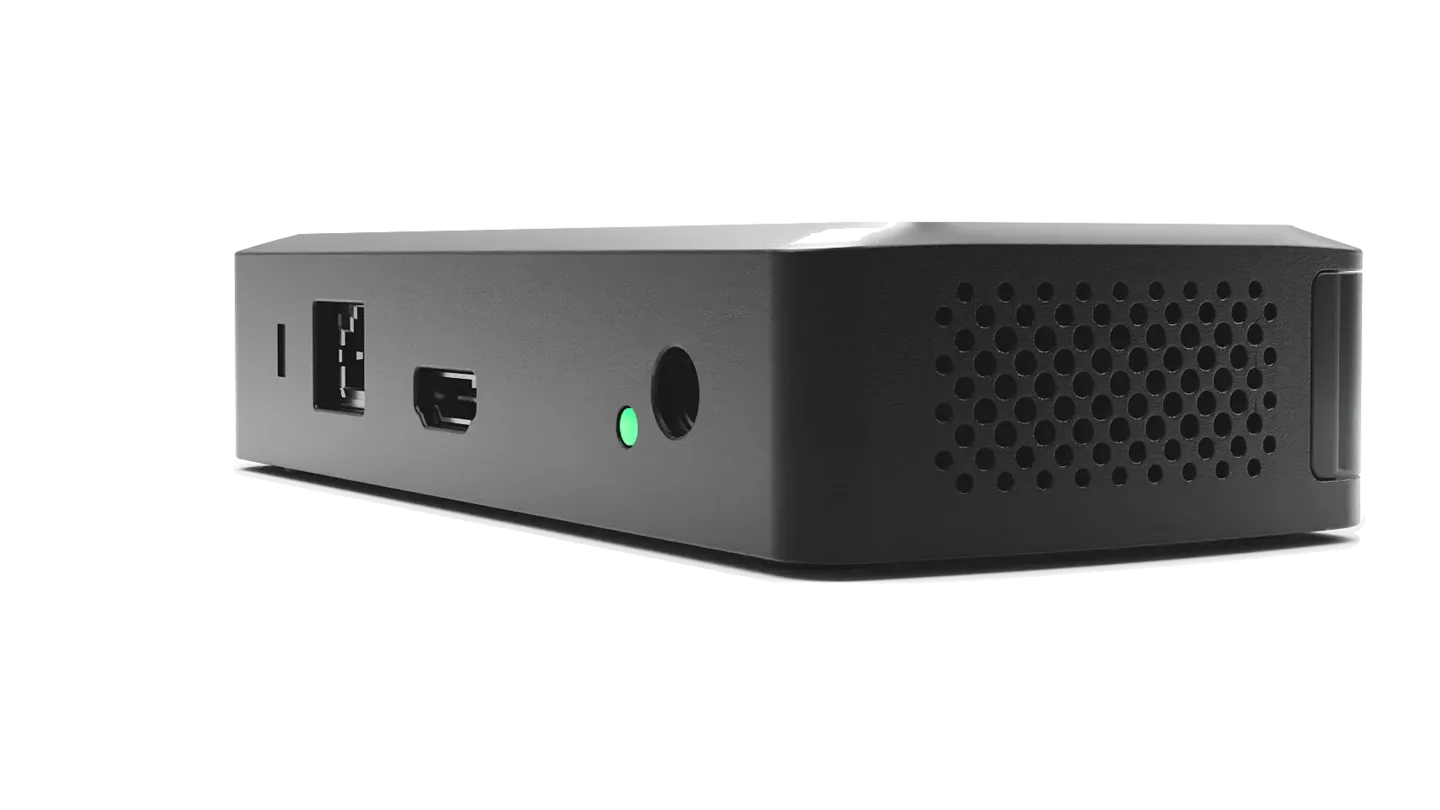
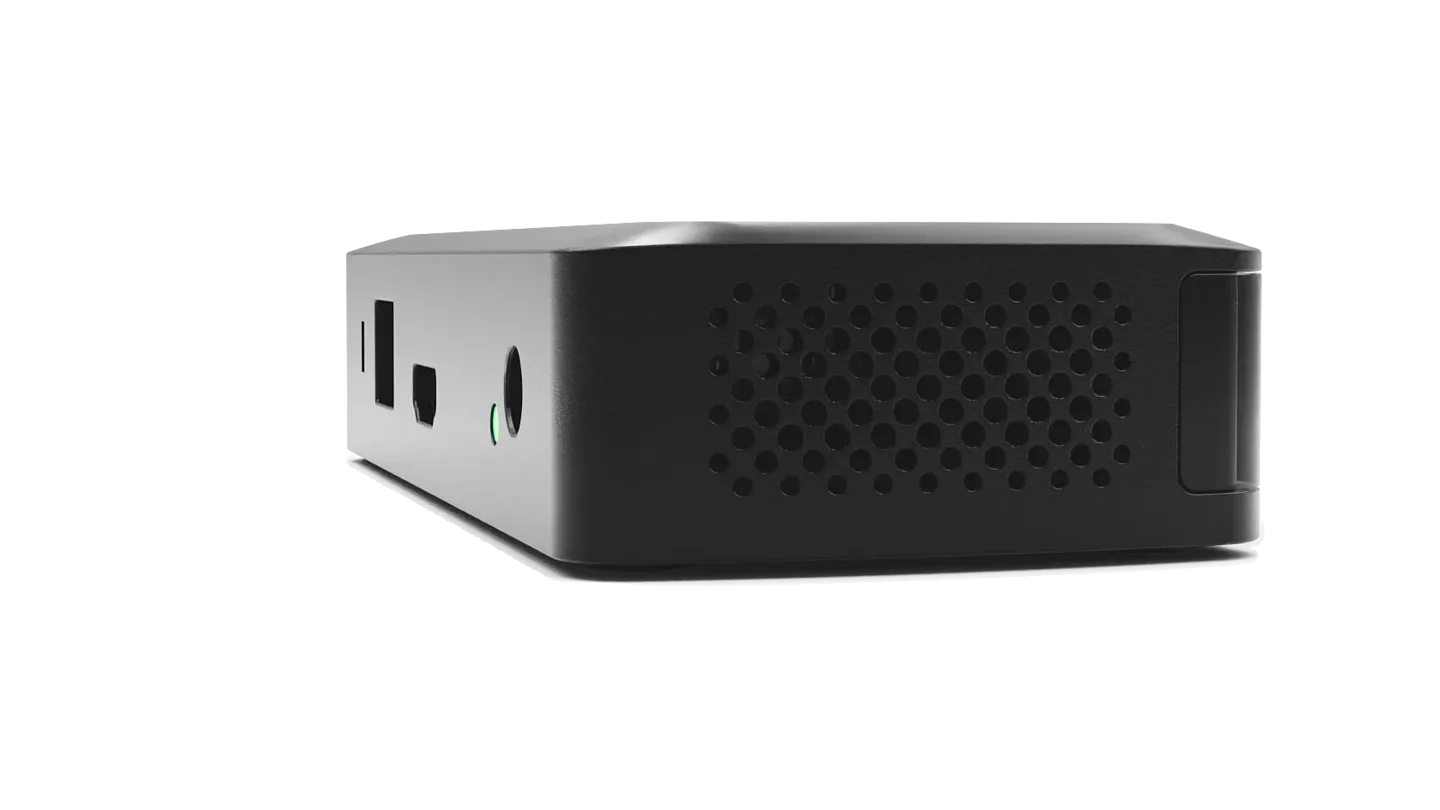
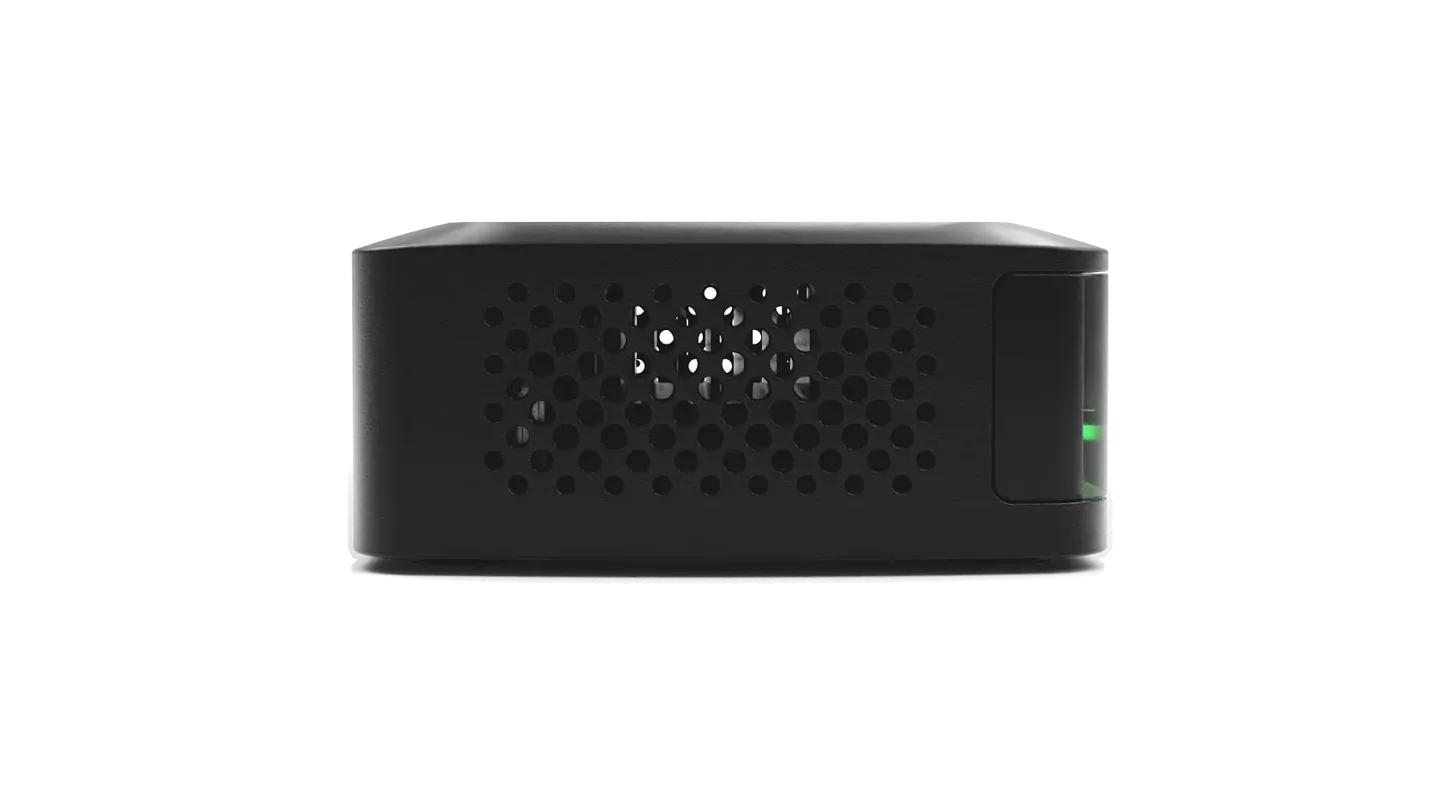
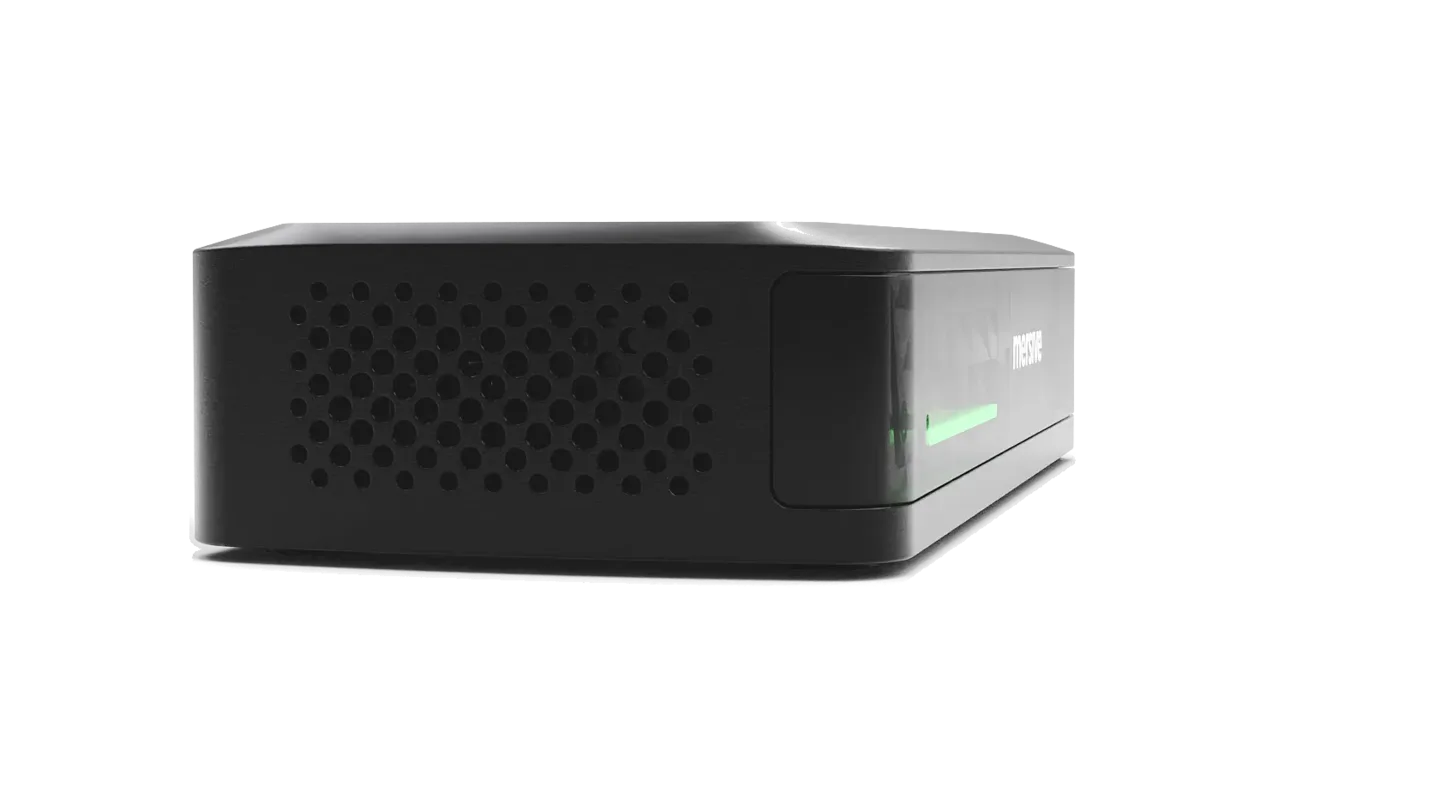
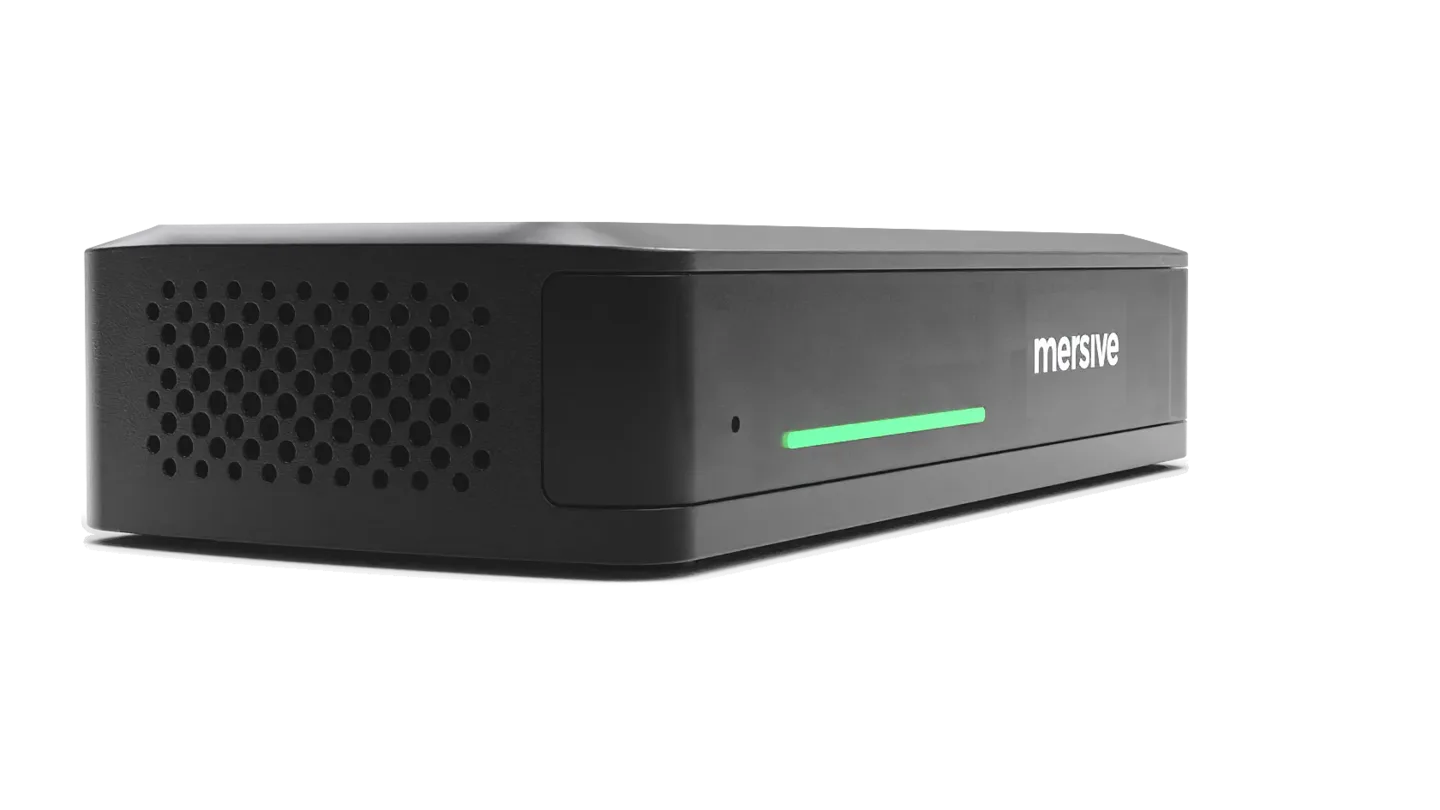
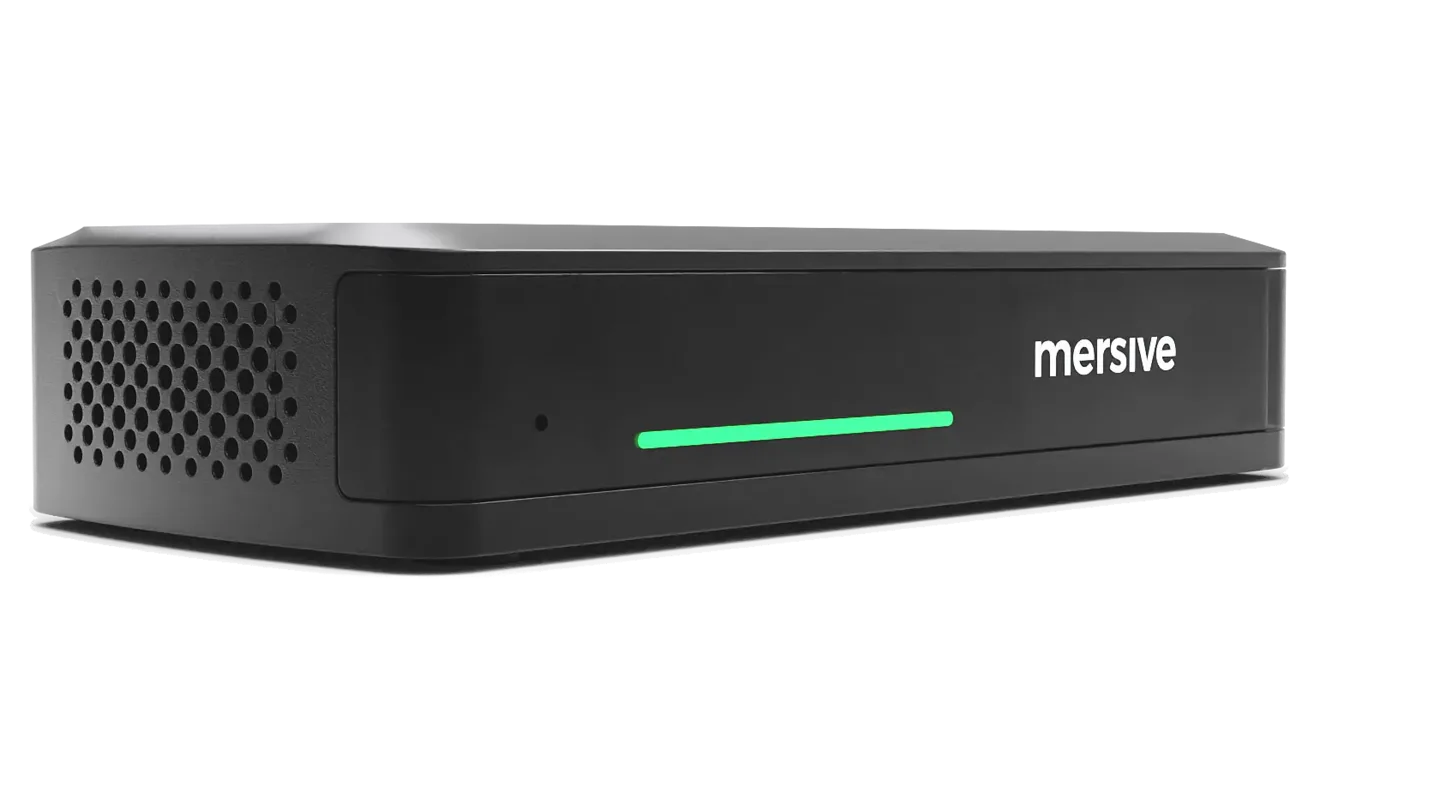
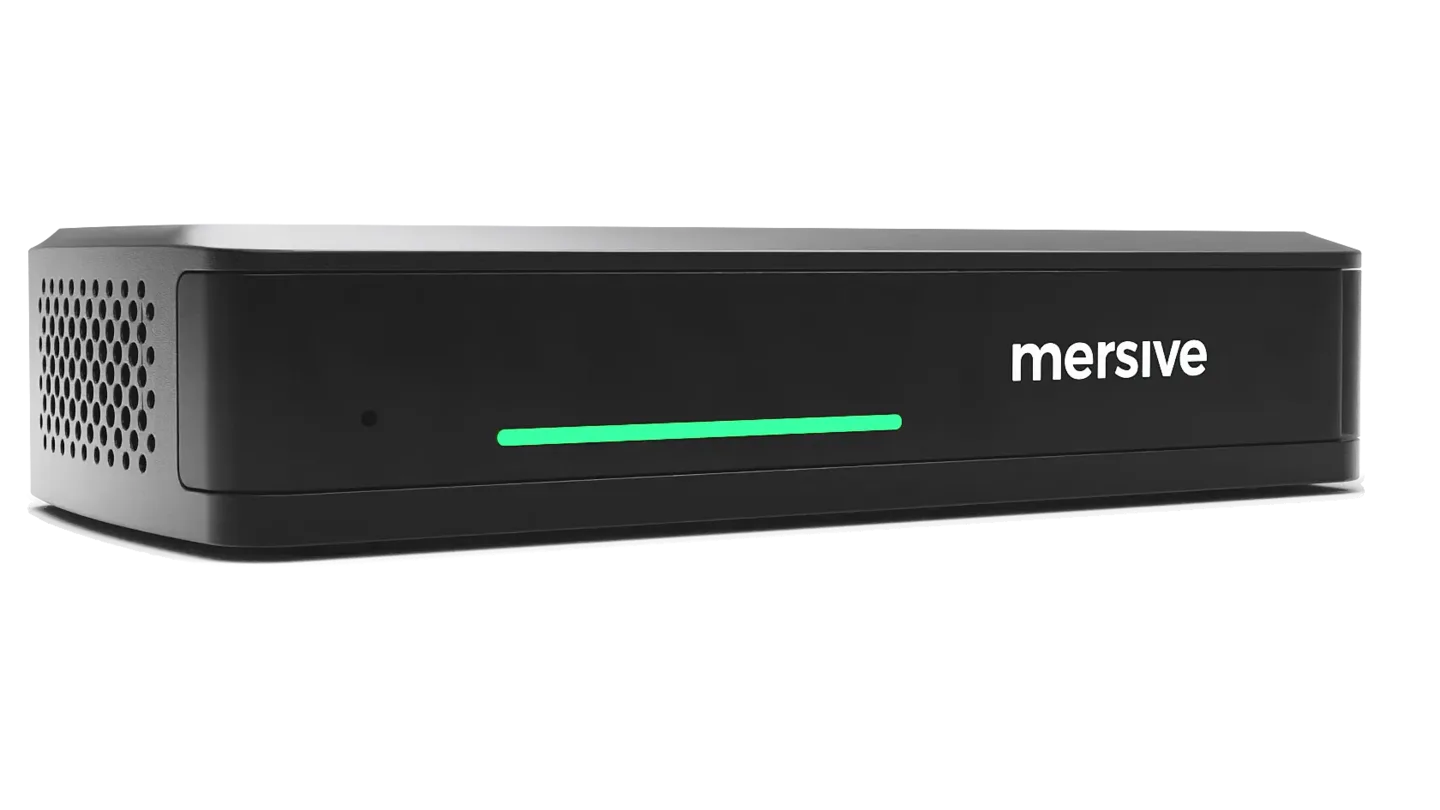
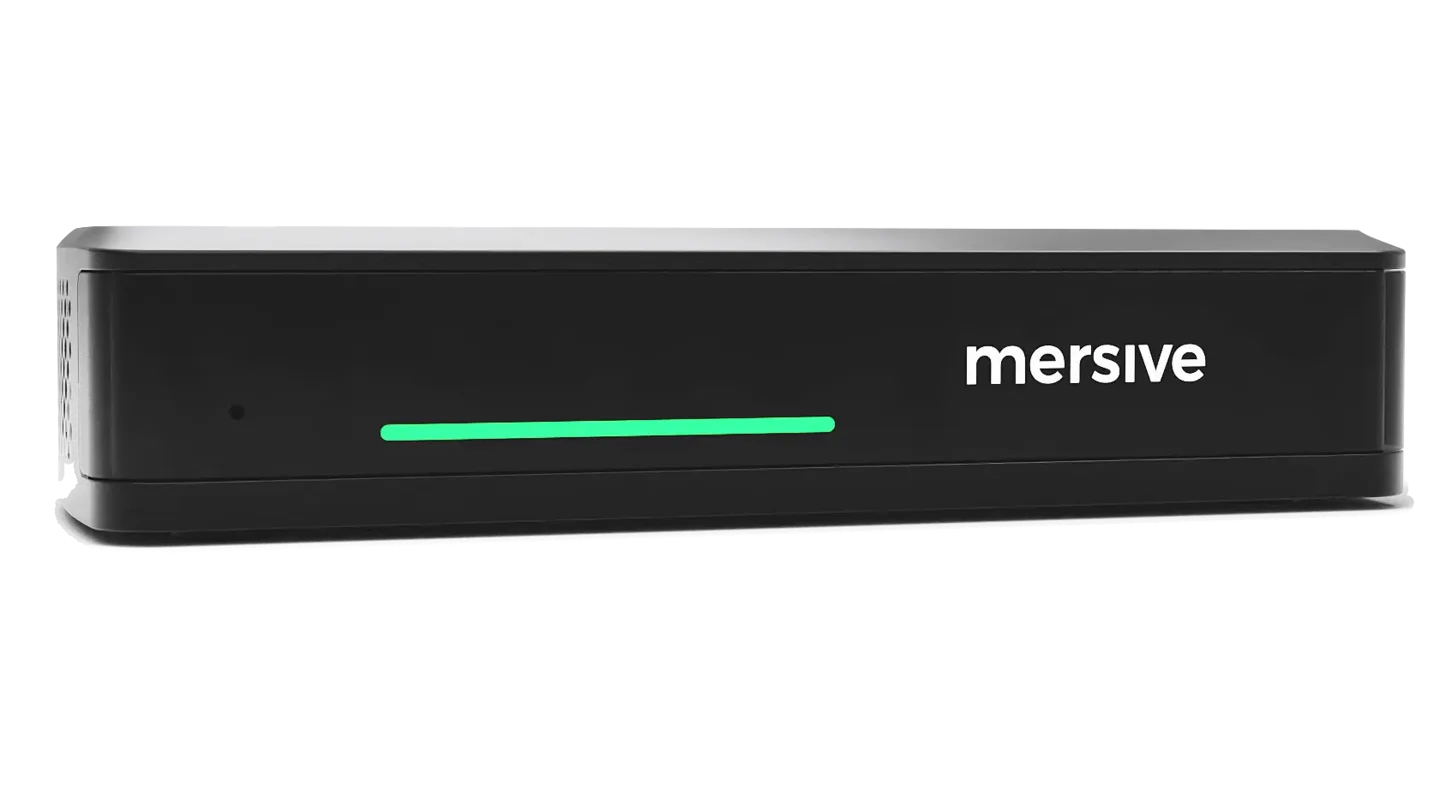
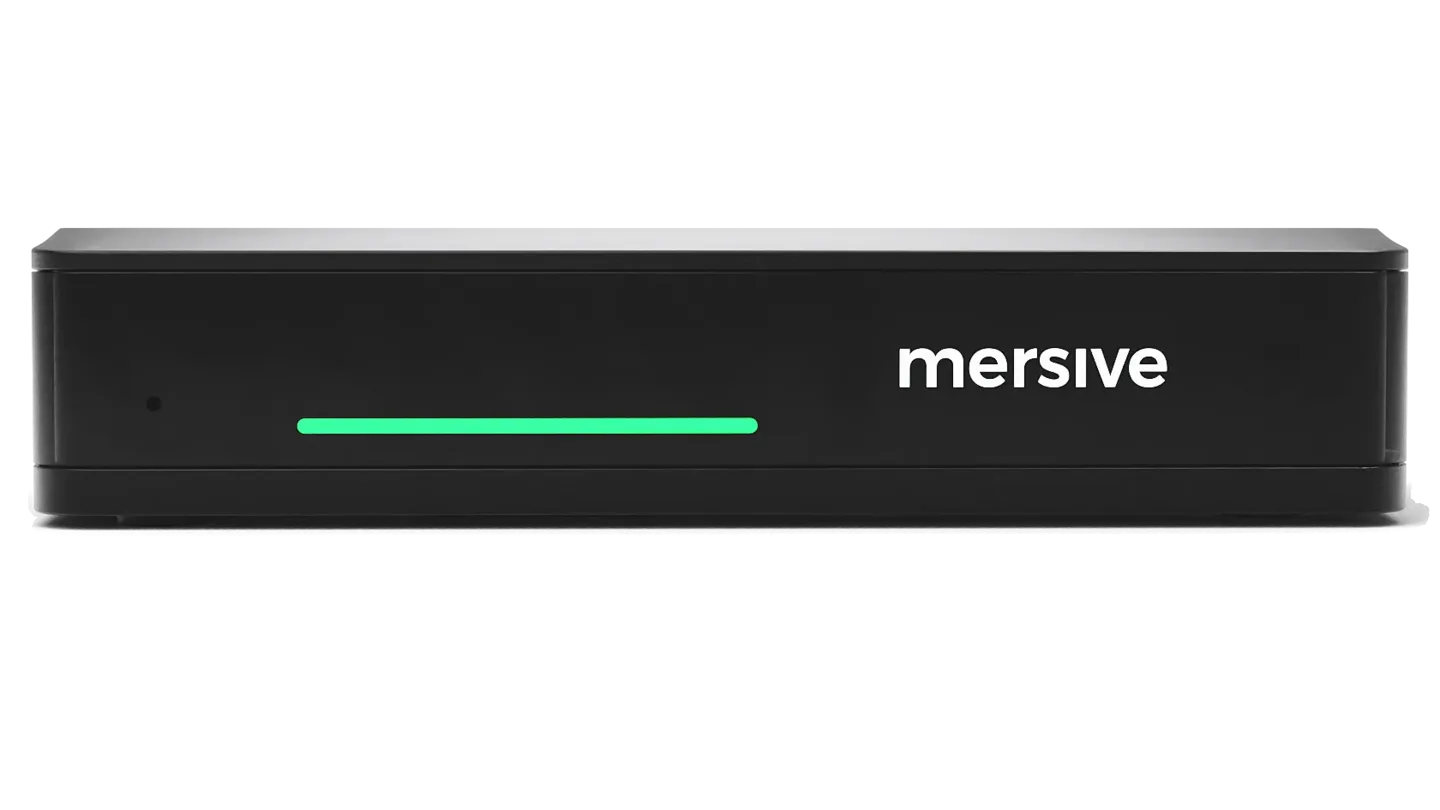
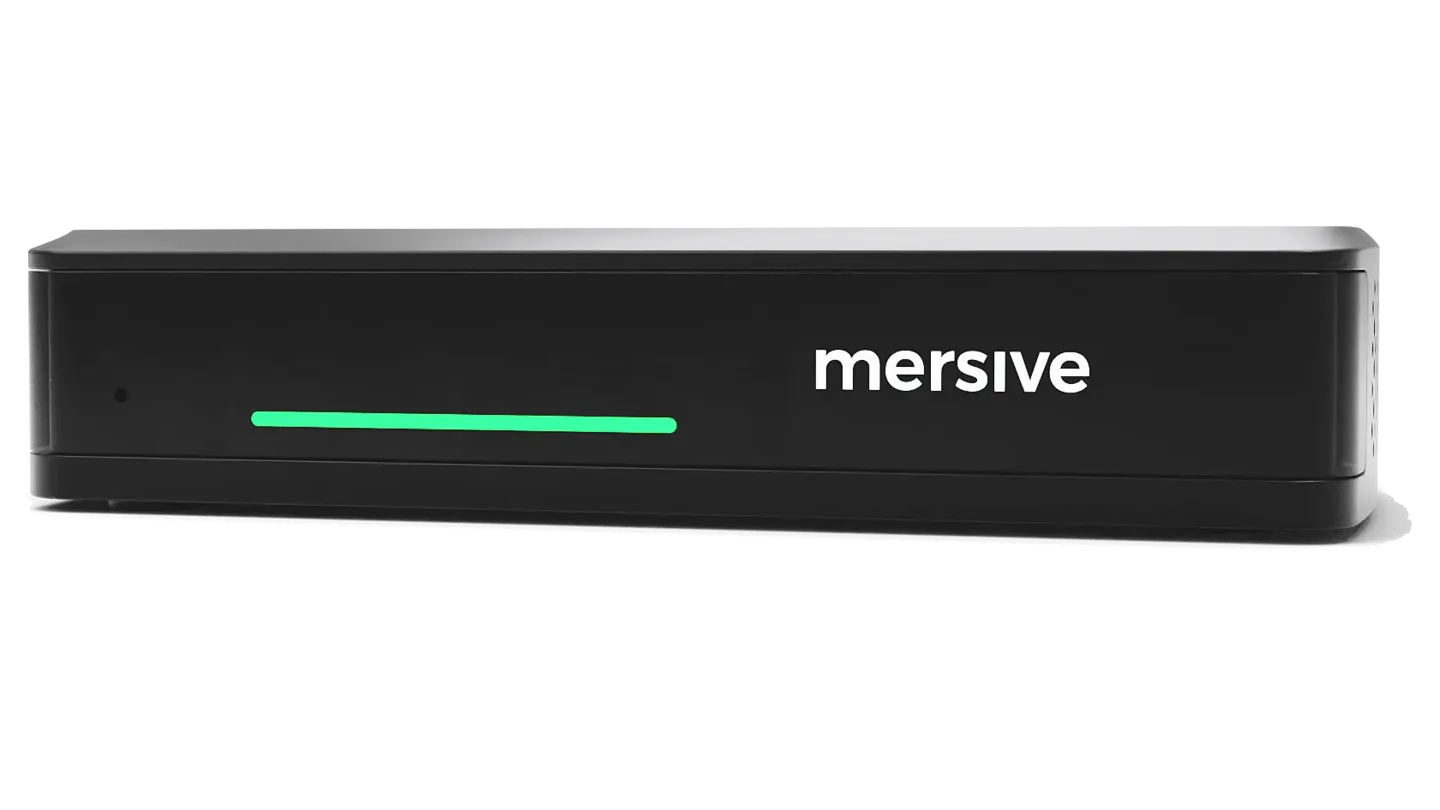
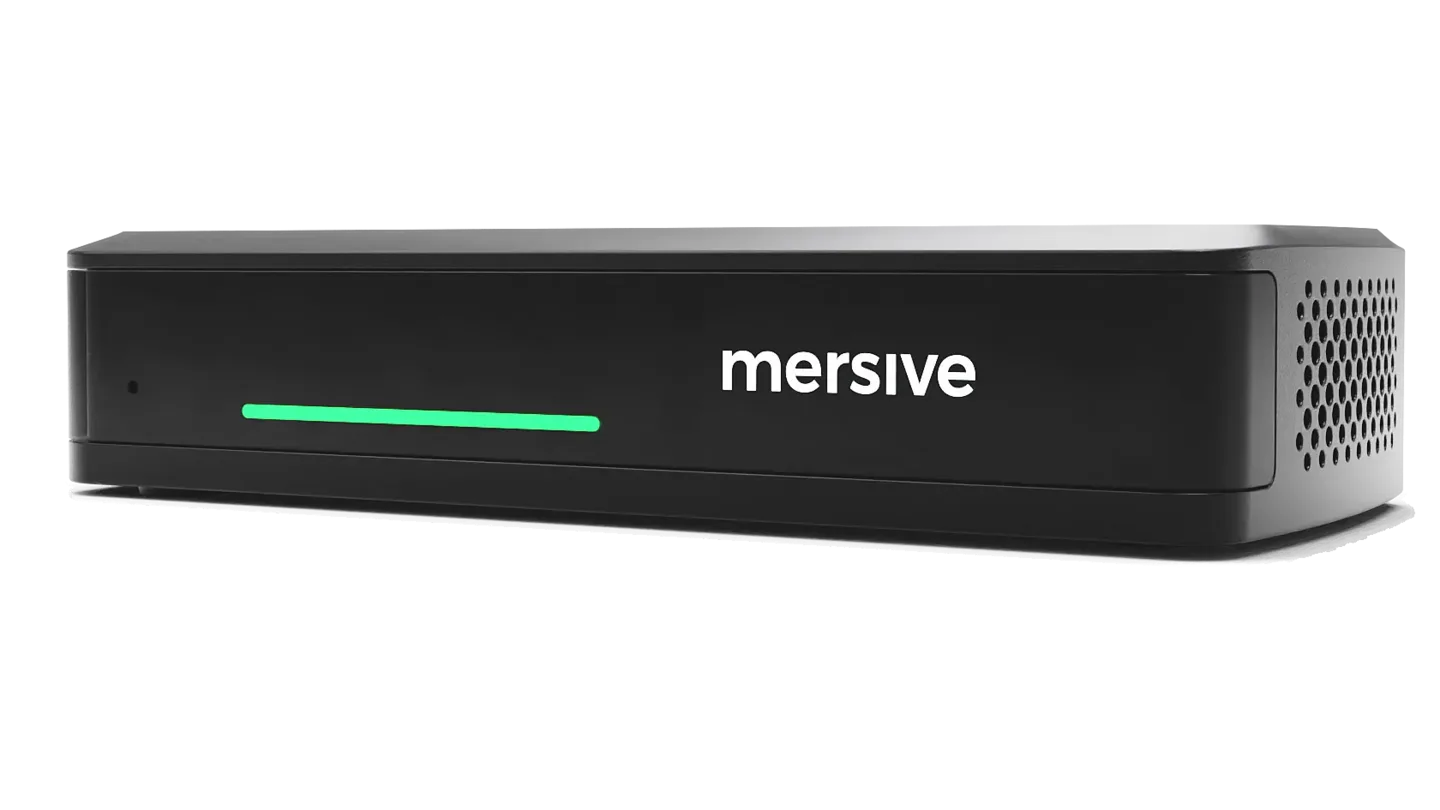
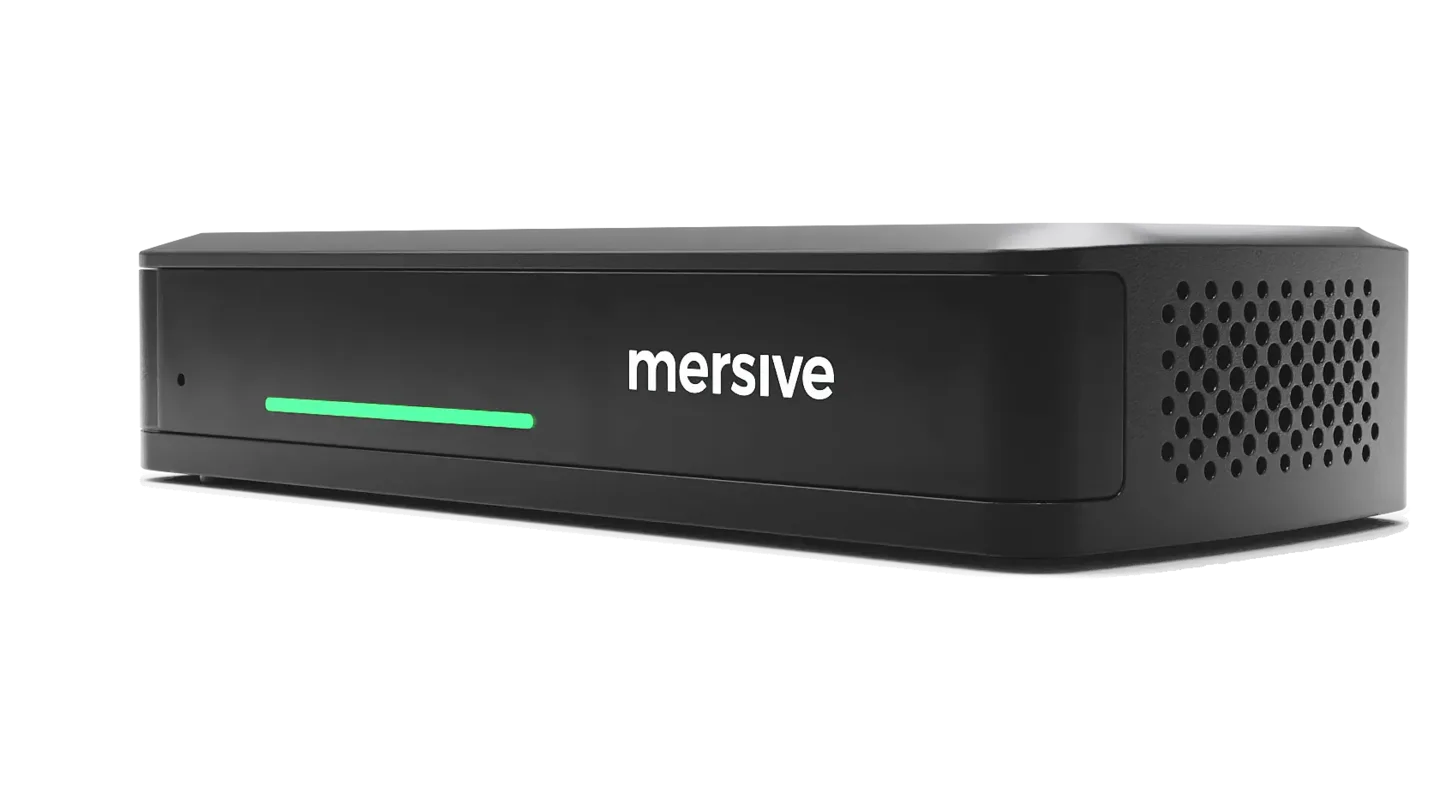
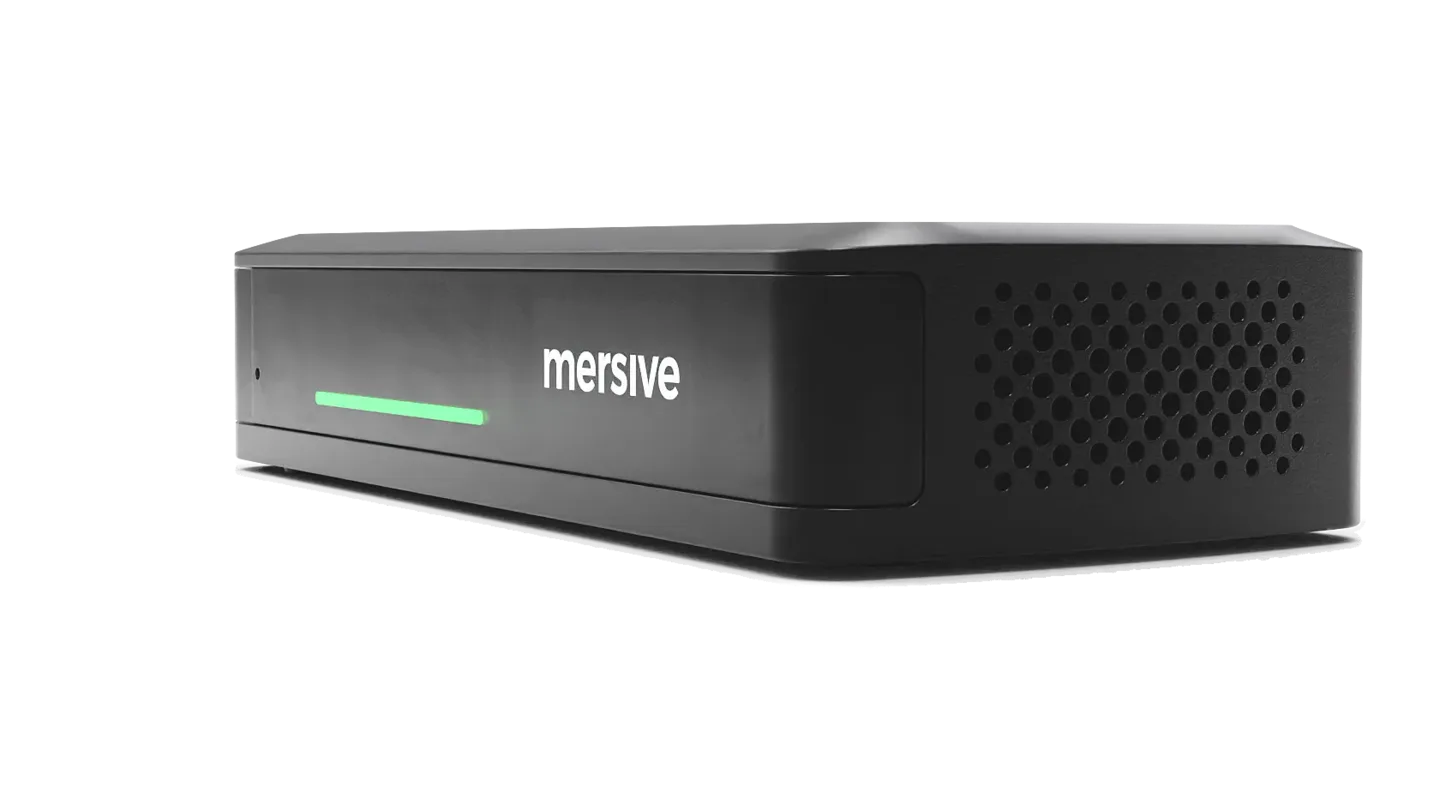
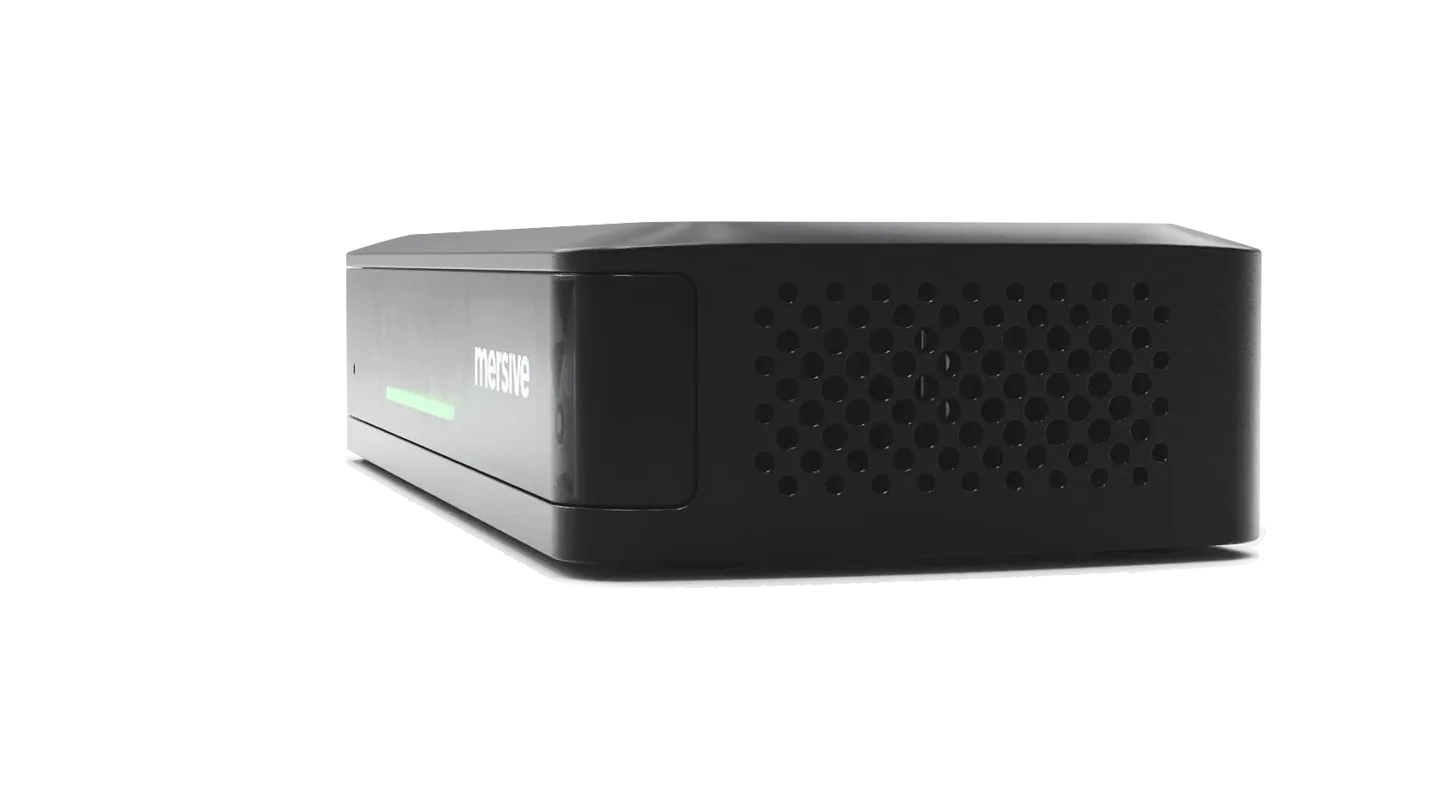
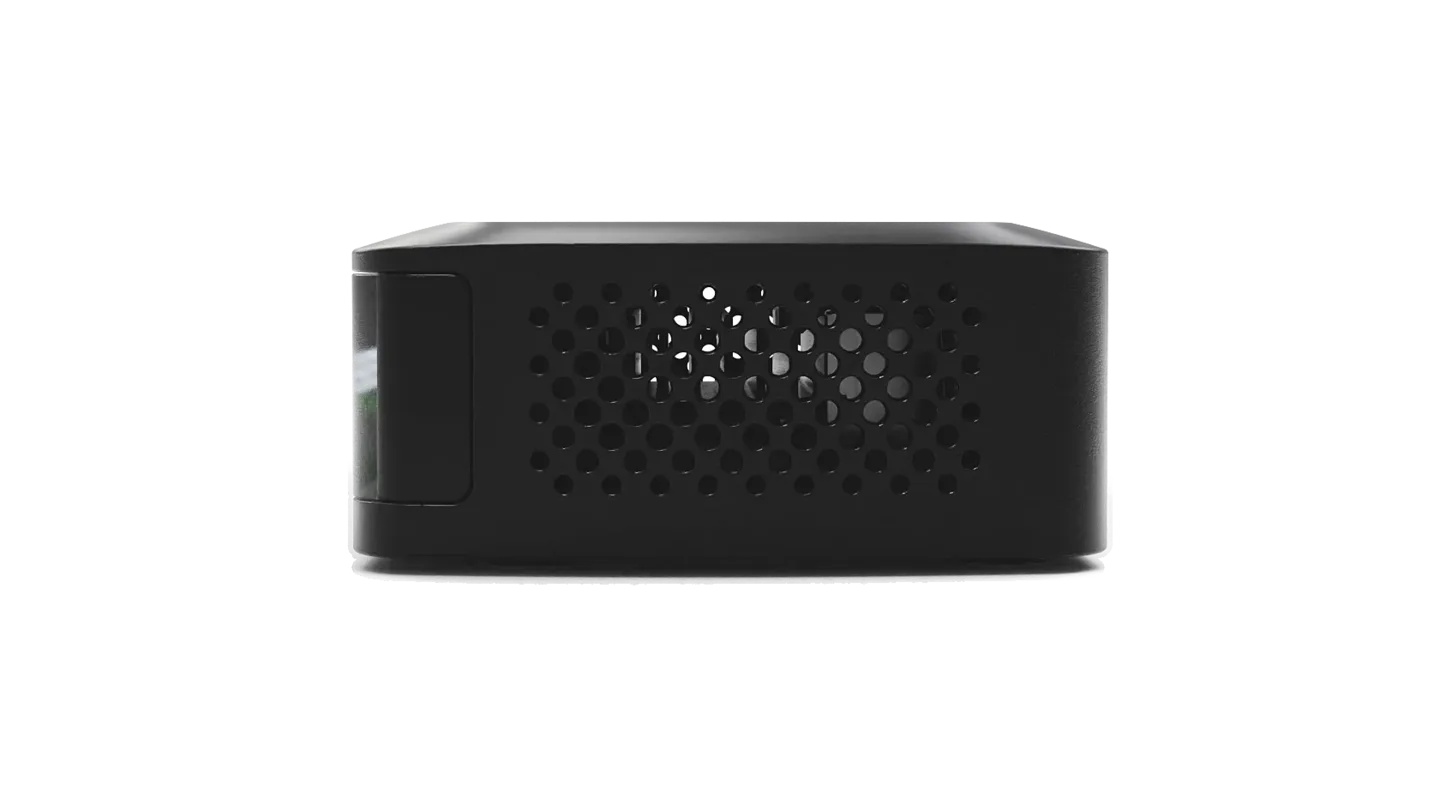
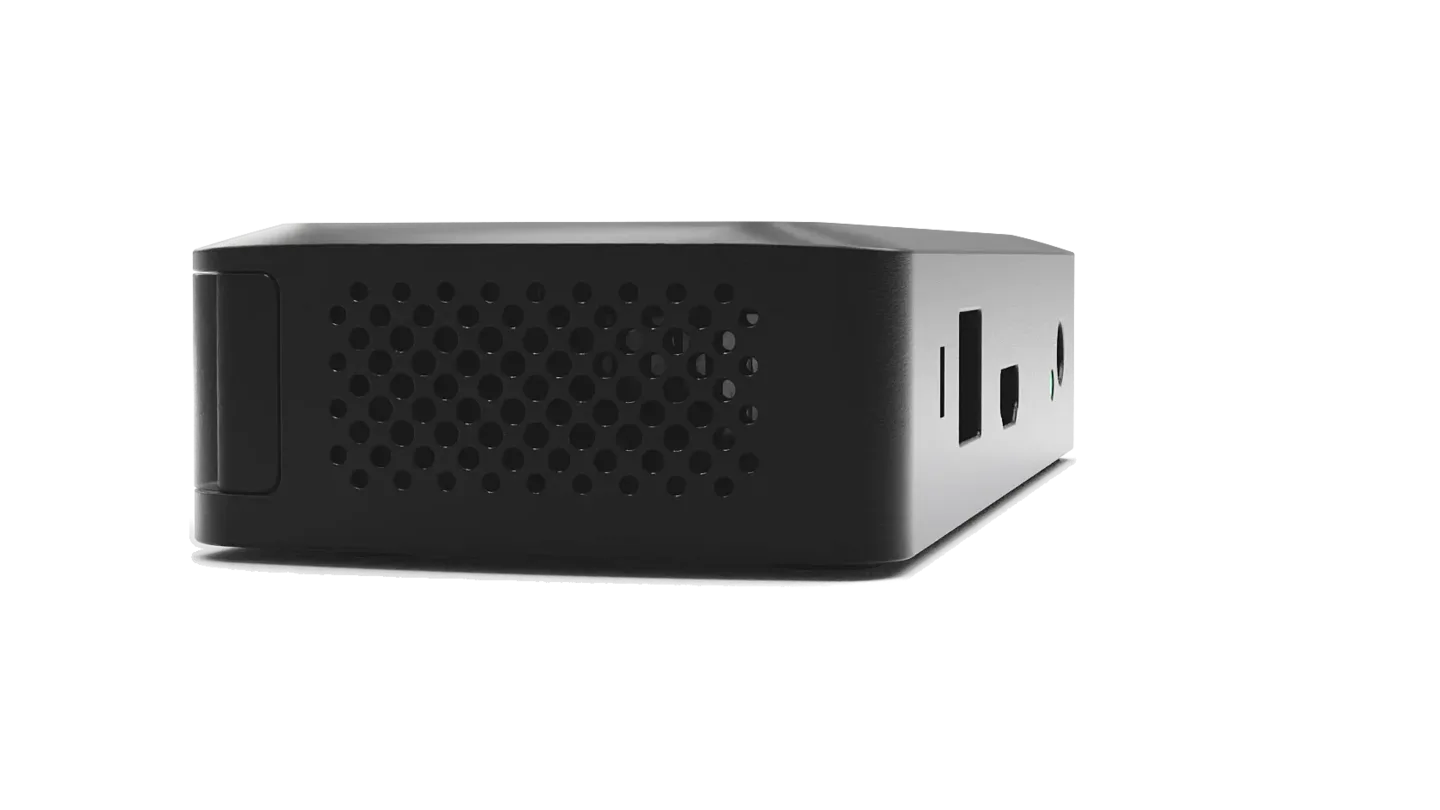
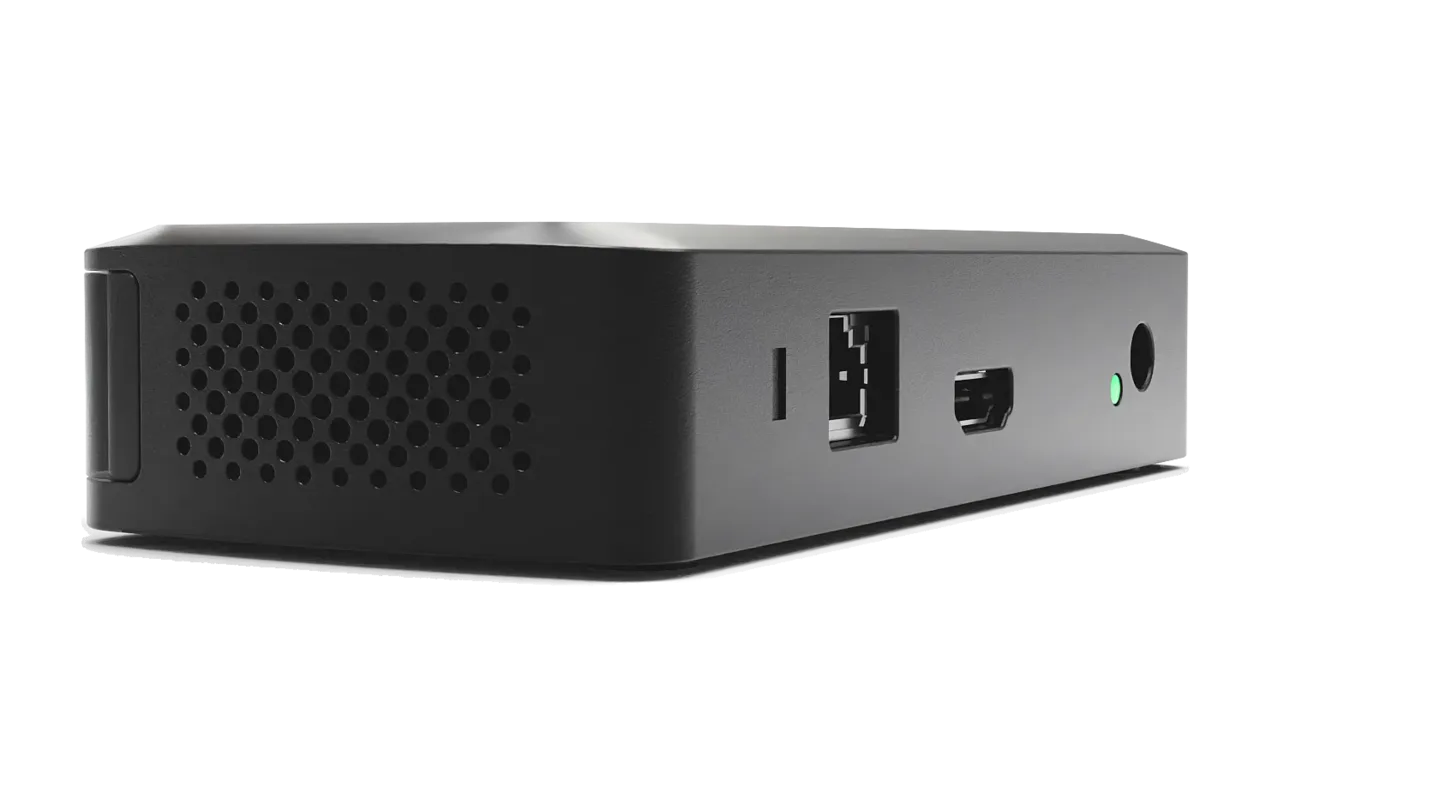
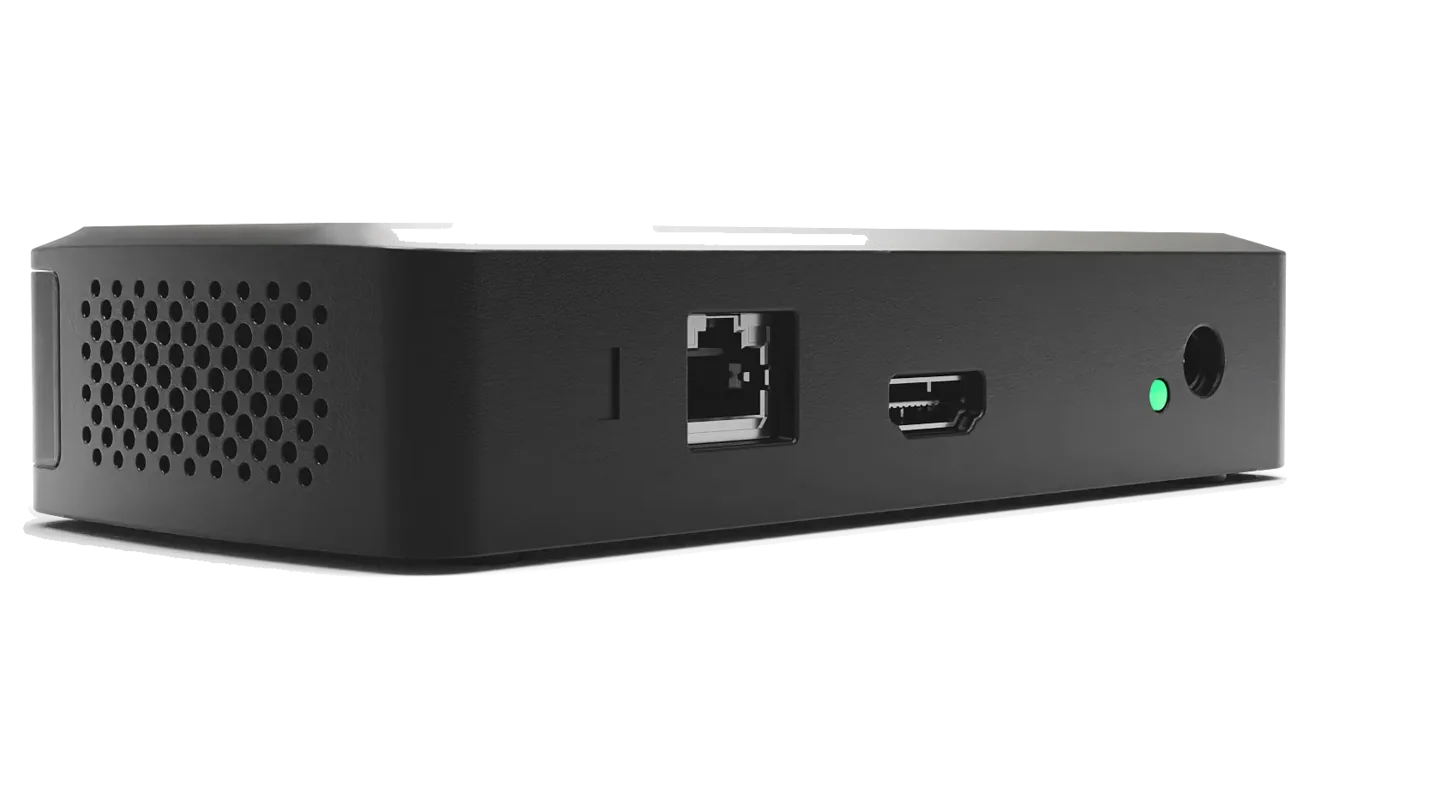
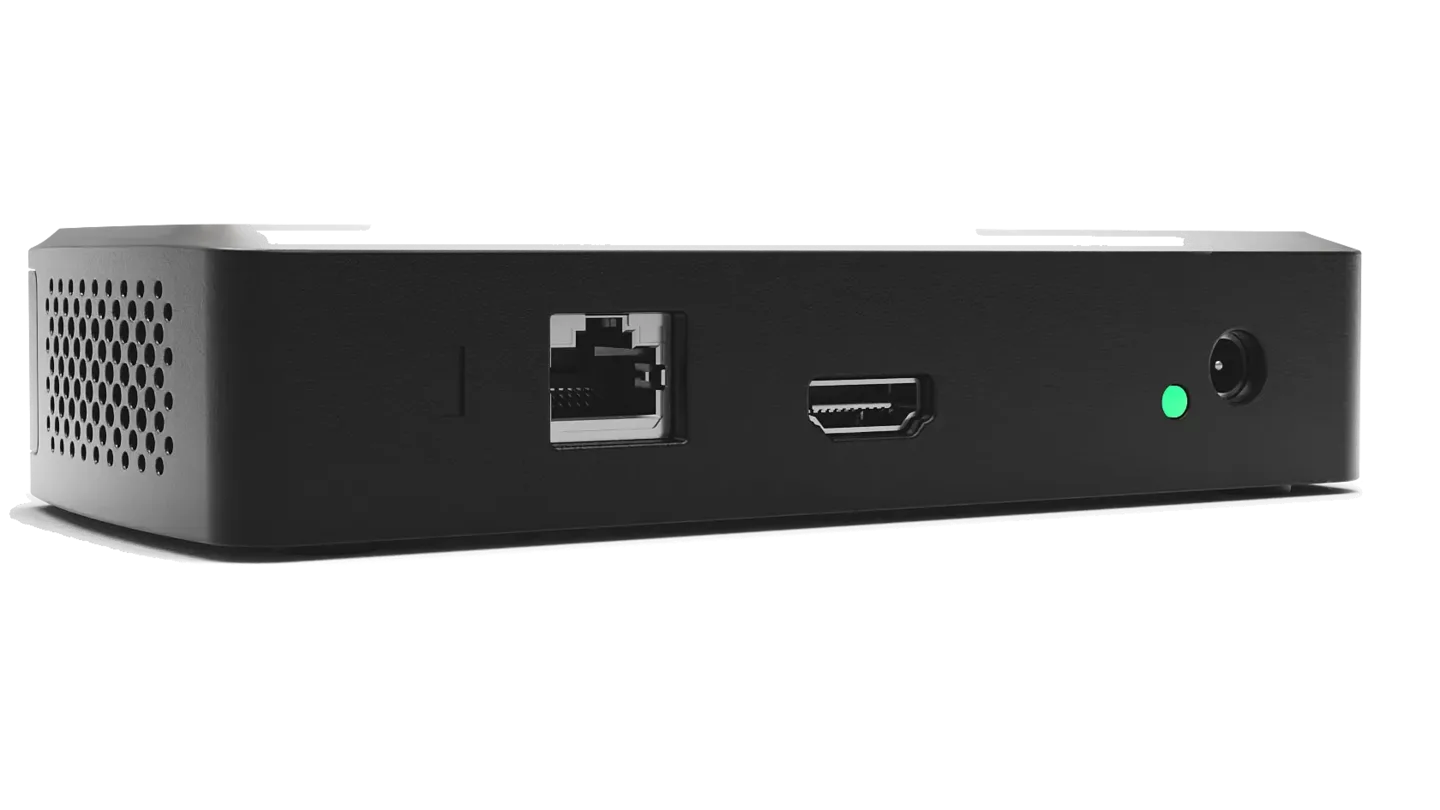
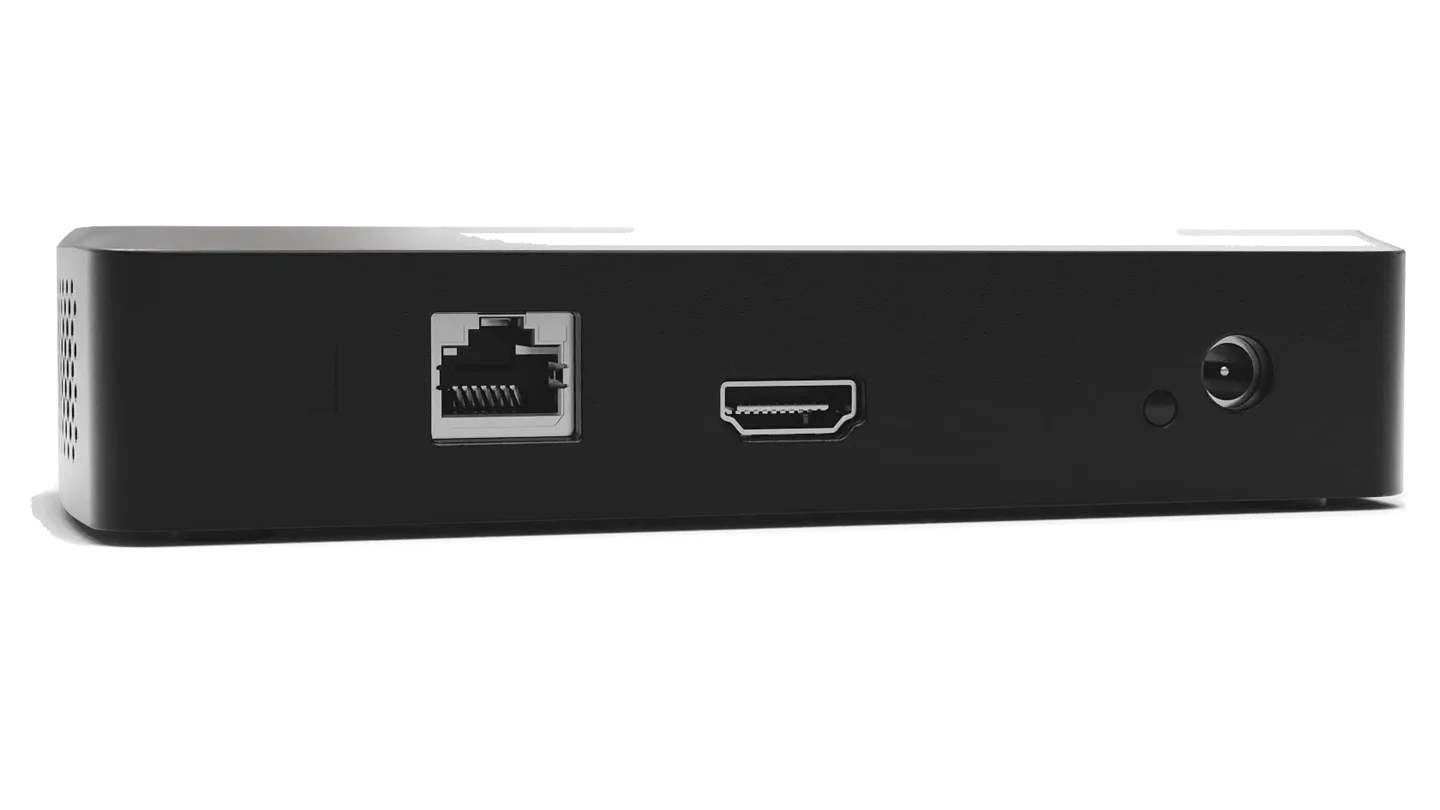
The same workspace Pro runs, up to 5 live sources side by side, with web-join and cross-network sharing, in the chassis that fits a huddle room, a classroom, or a whole floor of standard rooms.
Essentials isn’t a lite tier, and it isn’t a reduced build: it runs the same Polaris software as Pro. Every difference between the two is the chassis, not the platform: memory sets the share ceiling at 5 instead of 10, and with no USB input there is no room camera to bridge, so wireless BYOM and Link are Pro capabilities rather than a license away. Same workspace, same cloud, same security posture. Every capability below ships today.
The full multi-share workspace
Live sources composited side by side on the display, compared, annotated, rearranged from any seat, laid out automatically as sources join and leave, up to 5 here, 10 on Pro. The same workspace Pro runs, so a mixed fleet is never a mixed experience.
The casting paths your devices already speak, built in: Apple, Windows, and Chromebook users share natively on the LAN with zero Mersive software, and every share lands on the same workspace, side by side.
Every Essentials room joins the same fleet pane as the rest of the fleet: analytics, firmware, alerts, health, and idle-screen signage, from one login.
Certifications scoped to a cloud say nothing about the box on the wall, so the box gets its own proof. Two outside firms have had it: one over the network, one with the lid off, and the smaller unit was in scope in its own right.
Independent scan · July 2026
No network attack surface worth the name
An outside firm scanned a managed Pod. The ports that answer are the casting and appliance functions, and no persistent media listener was enumerable at all, the real-time media path uses ephemeral per-session UDP ports that respond only after ICE consent. There is no standing media service in the room to probe.
Independent physical attack · May 2025
Both units opened, probed, and both held
The hardware went further than a scan, and the smaller unit was in scope in its own right: a firm took a Gen 4 Pod and a Gen 4 Pod Mini in hand, opened them and attacked the hardware: UART and JTAG on the debug headers, an attempt to lift the firmware off the flash, a lab man-in-the-middle. No critical, high, medium or low-severity vulnerabilities were identified on either device. Root login over the debug interface is refused outright, with no password prompt even offered; the firmware could not be extracted; and no personally identifiable information was found stored on either unit.
On the device
Secure boot, sealed keys, an allowlist and 802.1X
Secure boot is mandatory on production firmware. The device’s own identity keys are sealed into an NXP SE050 secure element, the same part as Pro. USB access is by allowlist. 802.1X with EAP-TLS makes the room a first-class citizen of your NAC rather than an exception in it.
The company, and the cloud
ISO/IEC 27001:2022 · SOC 2 Type 2
Mersive is ISO/IEC 27001:2022 certified, with no nonconformities raised at the June 2026 surveillance audit, and the Polaris cloud this Essentials unit reports to is SOC 2 Type 2 attested.
Their caveat, which we keep: that does not make compromise impossible, but it would take an adversary of significant skill and effort. The full architecture, every scope statement and the audit findings: the Trust Center.
Open specs: nothing gated
The specification sheet, inline.
The full network and security posture on the page, including what Essentials deliberately doesn't do. That candor is the point.
Sharing4 rows ▾
Specification
Polaris Essentials
Simultaneous shares in the workspace
Polaris Essentials can currently support up to 5 live sources composited side by side
Web-join from the browser: no app, no download
✓
Native AirPlay · Miracast · Google Cast (LAN)
✓ all three, built in: cast from Apple, Windows and Chromebook devices on the room network with nothing installed
Mobile sharing · phones and tablets
✓ the Polaris app for iOS and Android: share your screen, photos or a live whiteboard, and control the workspace from your seat
Network4 rows ▾
Specification
Polaris Essentials
802.1X network authentication
✓ shipping. The data sheet lists wireless security as WPA2, WPA2 Enterprise or IEEE 802.1X — so an Essentials room authenticates to your NAC with a certificate exactly as a Pro room does.
Cross-network sharing (no VPN)
✓ included on every Polaris tier. Cloud-negotiated direct connections; signaling is outbound-only TLS on TCP 443, so there are no inbound firewall rules to request, and no VPN
Signaling and fleet management run outbound over HTTPS to Polaris Cloud. The device exposes no TLS listener of its own, so a port scan of the Mini finds nothing to negotiate against — the encryption that matters is on the outbound leg, not on an open port in your room
Secure boot · secure element
✓ secure boot is mandatory on production firmware, not a setting; NXP SE050 secure element on board holds the device’s own identity and update-verification keys in hardware — the same part as Pro. The secure-element build assigns an I²C bus per machine and fails the build outright for any machine it does not handle, so every shipping unit, Mini included, has one
TAA-compliant supply chain
✓ built with Advantech in Taiwan, a TAA-designated country, with the bare printed circuit board the only China-sourced item in the build
Signed updates, no downgrade — and automatic rollback on a failed load
✓ the same firmware mechanism as Pro, because it is the same distro: update packages are checked for authenticity and integrity before they are applied and a downgrade to an earlier version is refused, while two firmware partitions mean a load that fails to come up returns to the last known-good version
Linux-hardened OS
✓ purpose-built, minimized Linux at the display: no Windows attack surface, no general-purpose desktop
Physical: Kensington Nano Security Slot
✓ on the chassis
Content protection
✓ HDCP 2.0
Where Essentials stops: Pro territory3 rows ▾
Specification
Polaris Essentials
True wireless BYOM (room AV bridged into your call)
— Pro only
Display outputs
One. Essentials drives a single display; Pro ingests and drives two — Pro only
HDMI input: wired ingest from a room system or a laptop
— Pro only. The Mini has no HDMI receiver on the board, so this is a chassis difference rather than a license
I/O5 rows ▾
Specification
Polaris Essentials
HDMI output
1× HDMI 2.0 out — one display, where Pro drives two. 4K (4096 × 2160) at 30 Hz; 1080p and 720p up to 30 Hz
Ethernet
1× 10/100/1000 RJ-45. No PoE on Essentials — the Pod takes PoE+, the Mini does not
H.264 encode and decode · H.265 encode and decode · VP8 decode · VP9 decode · AV1 decode · JPEG/MJPEG decode. In service: H.264 carries AirPlay, Miracast and web-join over WebRTC; VP8 carries Google Cast; VP9 decodes digital signage playback
What the Mini does not have
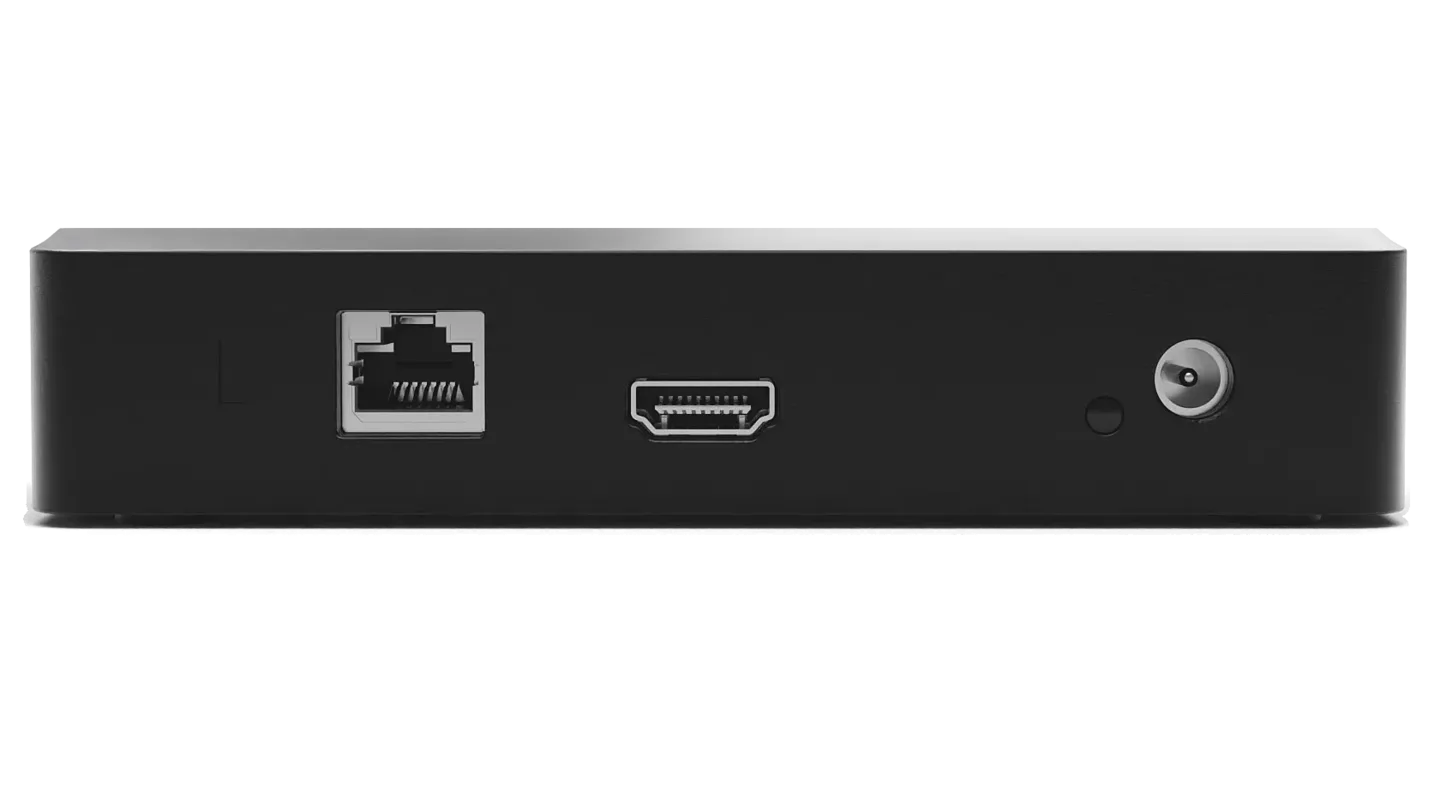
No USB ports, no HDMI input and no audio-out jack: the rear panel is Kensington Nano Security Slot, Ethernet, HDMI 2.0 and DC power, and that is the whole of it. This is why wireless BYOM is a Pro capability rather than a license away — there is no USB host to put a room camera on
Compute4 rows ▾
Specification
Polaris Essentials
Chipset / SoC
MediaTek MT8370 (Genio 510): ARM SoC with Mali GPU
NPU: on-device AI silicon
NPU 3.2 TOPS (INT8) in the MediaTek documentation, 6.4 TOPS at minimum precision (INT4), the convention MediaTek uses for its current Genio series.
RAM · storage
4 GB · 32 GB eMMC: 19 GB available for storage, the remainder holding the system image and the second partition that carries an OTA update and allows firmware rollback
Video pipeline: simultaneous decode
H.264 and H.265 encode and decode; VP8 and VP9 decode — the same codec surface as Pro, not a reduced one. Composites into a 4K (4096 × 2160) 30 Hz output; 2+ concurrent 1080p30 decodes required, more supported; the ceiling is 5 simultaneous shares, set by memory on the smaller chassis rather than by licensing
Power & physical4 rows ▾
Specification
Polaris Essentials
Power
12 VDC, 2 A, 24 W max from the barrel jack; no PoE on Essentials — the Pod takes PoE+, the Mini does not. The power supply is in the box
Dimensions · weight
58 × 140 × 30 mm. Essentials and Pro are different chassis: Pro is 86 × 184 × 30 mm. Both released data sheets print 150 × 67 × 30 mm and 204 g for both products, which cannot be true of two different enclosures; the sheets are being reissued
Operating environment
Indoor use only · 0°C (32°F) to 35°C (95°F) · 30% to 70% RH ambient
Does Polaris Essentials run the same software as Polaris Pro?
Yes. Essentials runs the same Polaris software as Pro: the same workspace, the same cloud, the same security posture. The differences are the chassis, not the platform.
How many people can share at the same time on Polaris Essentials?
Around 5 live sources, composited side by side and laid out automatically as sources join and leave. The ceiling is memory on the smaller chassis, not a license or a reduced build.
Does Polaris Essentials support wireless BYOM or Polaris Link?
No, and it is a chassis limit rather than a license. True wireless BYOM bridges the room's own camera and mic into the call, so the peripherals have to be attached to the pod. The Mini chassis has no USB input. Link is a software bridge between the laptop in BYOM and the Pro, and the Pro is what controls the room's cameras and peripherals. That is why Link needs a Pro.
One. Polaris Essentials drives a single display, at DCI 4K, 4096 x 2160, at 30 Hz; Polaris Pro ingests and drives two.
Can a guest share from another network without a VPN?
Yes. Cross-network sharing is included on every Polaris tier, Essentials included. Cloud-negotiated direct connections, with outbound-only TLS signaling on TCP 443: no VPN, and no inbound firewall rule.
When a room outgrows Essentials: Polaris Pro adds true wireless BYOM conferencing, HDMI input and dual 4K60 output: same platform, same muscle memory, so stepping up is a pod swap, not a forklift. Cross-network sharing is on both. Step up to Pro →
See it in your own rooms
Hardware trials ship for every product, direct from Mersive. When the rooms prove it, we introduce your regional partner for the rollout.
Rogue signals are jamming the airspace above the room. You're the pod — clear the channel. Jammers rain static, splitters multiply, and every fourth wave the FIREWALL sweeps in. Downed signals drop powered displays: relay shield, dual beam, the piercing LANCE and the wide-angle SWEEP.
Shares keep coming. Compose the workspace — complete a row and it renders to the display. Hold a piece for later, trust the ghost, and slam it home when you're sure.
score: 0 · lines: 0 · level: 1 · best: 0
Mars · canyon relay
RELAY RUN
Aliens are looting Earth's audiovisual gear, and someone has to invoice them for it. You're the AV Integrator: fight through three decks of their freighter, shoot the capsules open, and take the equipment back — HDMI becomes a Blaster, a Display fans into Multicast, Coil fires Fiber, a Speaker is pure Subwoofer. Switches level your weapon, Surges take one hit for you. Snatchers steal; make them regret it. A boss holds every deck.
score: 0 · mission: 1/3 · best: 0
Pluto · deep-network maintenance
PACKET MUNCHER
Something is nesting in the farthest switch fabric. Run the corridors, eat every stray packet, and mind the four interference glyphs — each hunts its own way. Grab a powered display and, for a few seconds, the hunters become the hunted. Ten sectors between you and a clean network.
score: 0 · sector: 1/10 · lives: 3 · best: 0
Venus · broadcast campus
SIGNAL JUMPER
Ten displays across the broadcast campus went dark, and the interference is walking around like it owns the place. Run the loading dock, the cable trench, the rooftop, the mezzanine and the antenna tower, then push on through the uplink yard, the static fields, the rack canyon, the microwave bridge and master control — stomp the glyphs flat, bank the signal bits, bump the cache blocks, plant the midpoint flag, ride the ferries, and touch every display back to Polaris green. Game over offers a CONTINUE from the top of the level that beat you.
The campus's flagship display was stolen and walled up in a fortress beyond the north-east mesa. Cross a hundred screens of field, woods, river and dead server yard, crimper in hand — find the two small keys, mind the spikes, arrows and false floors, put five strikes into the CRT TYRANT's open screen, and raise the display where it belongs. Five hollow caves hide heart containers, and the RELAY TOWER on the south-west shore keeps the MERSIVE POLARIS — press X to grab what's in front of you, or to send the puck flying out and back.
The dongle users are pouring out of the rings in formation: HDMI drones, button wingmen, and the big conference pucks running the show. Hold the line in the Polaris fighter. They swoop in, regroup, breathe, and dive. Mind the boss pucks’ PAIRING BEAM — get caught and your fighter is theirs. Shoot that boss down mid-dive and your fighter comes home to fly beside you: DUAL FIRE. Every fourth wave is a demo stage — pure flying, pure bonus, PERFECT if you drop every last one.
score: 0 · wave: 1 · lives: 3 · best: 0
Mercury · the night side circuit
SOLAR CIRCUIT
A run cut across Mercury’s night side, Point A to Point B, against the clock. The sun never sets here and never rises either — it just sits on the horizon throwing its corona up the sky, and everything you can see is either lit by it or hiding from it. The route opens wide and fast, closes to a canyon barely three lanes across, climbs, and falls away again, four stages of it. Keep it on the basalt: the regolith either side will drag you down and take your speed with it. Stay clean and the craft keeps finding more — the longer you hold the line, the faster it will let you go, and the yellow pads are how you get there sooner.